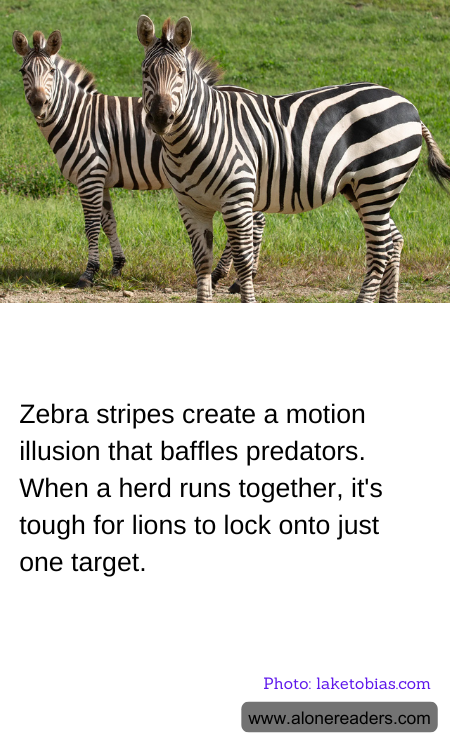
The distinctive black and white stripes of zebras have long puzzled scientists and nature enthusiasts alike. One compelling theory suggests these stripes create a motion illusion that confuses predators during a chase. This phenomenon becomes especially pronounced when zebras move as a group. As a herd of zebras gallops, their stripes merge into a dizzying array of moving patterns that can disorientate and baffle predators like lions, making it difficult for these carnivores to focus on or track a single animal.
The confusion arises from the way the motion of the stripes interacts with the visual processing abilities of the predator. Predators typically have excellent eyesight and use motion detection to home in on their prey. However, the alternating stripe pattern disrupts this ability, creating visual noise and illusions of depth and movement that are not present. This could effectively camouflage the individual zebra in the fleeing group, giving the herd a better chance to escape.
Research supports this theory, demonstrating how in nature, optical illusions can play a significant role in survival strategies. Studies using models and digital simulations show that from a distance, the stripes can make it harder for predators to estimate the zebra’s speed and trajectory. This misjudgment provides zebras with vital seconds to flee from danger, highlighting an evolutionary advantage through visual trickery.
In essence, the zebra’s stripes serve as more than just an aesthetic feature; they are a sophisticated adaptation to life in a predator-rich environment, illustrating the intricate and often surprising ways natural selection shapes the animal kingdom. The mystery and complexity of such natural designs continue to inspire and challenge our understanding of evolution and animal behavior.
