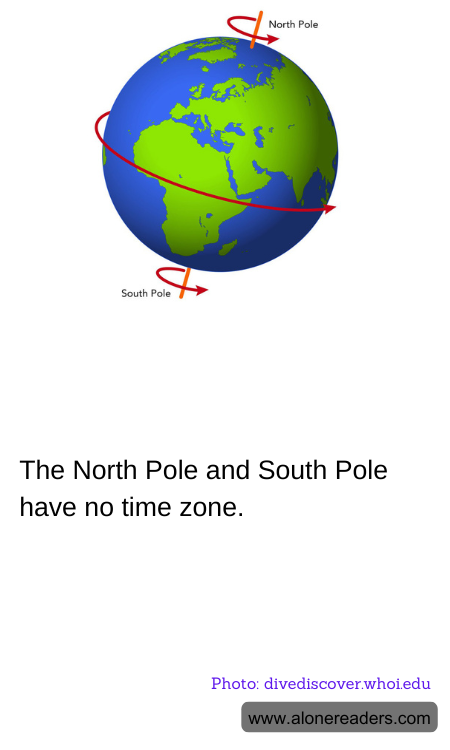
In the extremes of our planet, the North and South Poles present unique challenges and peculiarities, not least of which is the concept of timekeeping. Unlike other parts of the world, the poles do not have official, designated time zones. This is primarily because each pole is a point where all the time zones converge, making conventional time zone demarcations impractical.
At the North Pole, the sun rises and sets just once each year. This phenomenon directly impacts how time is perceived or used. Typically, time at the North Pole is based on the preferences or practical needs of those who are there, which are usually scientists or occasional explorers. Often, they use the time zone of their supply base country or the country that sponsored their trip. For example, a research team from the USA might use UTC-4 or UTC-5, aligning with Eastern Daylight Time or Eastern Standard Time depending on the time of year.
The South Pole experiences similar conditions, with the sun appearing to circle above the horizon in the summer and disappearing in the winter. Amundsen-Scott South Pole Station, a scientific research site at the South Pole, primarily uses New Zealand Time (NZT). This choice is logistical, as New Zealand is the last stop for flights going to Antarctica.
The lack of a fixed time zone at both poles may seem unusual but is quite practical. Given the poles' unique sun cycles and the international composition of travelers and researchers, binding these locations to a specific time zone would offer little practical benefit. Instead, adherence to more relevant and functional time standards based on operational needs or logistical connections makes activities and coordination at these remote ends of the Earth feasible and effective.
Thus, while the rest of the world divides itself into neatly arranged slices of time zones, the poles operate on a more fluid concept of time, dictated by the needs of those braving these extreme environments rather than the position of the sun relative to a fixed point on the globe.
