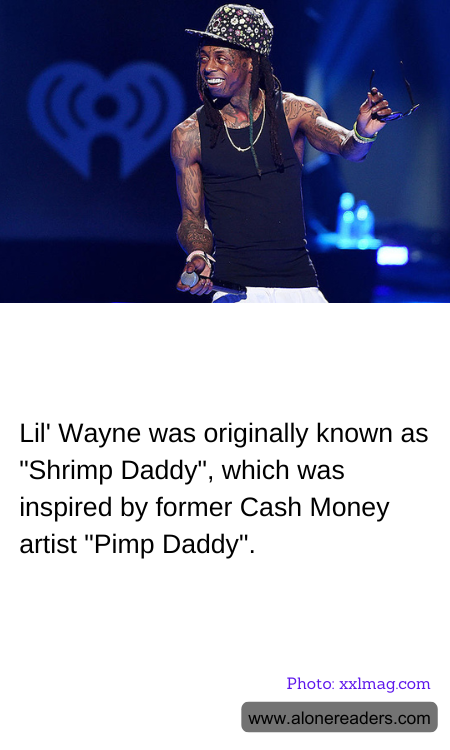
Before becoming known as Lil' Wayne, Dwayne Michael Carter Jr. briefly bore the moniker "Shrimp Daddy". This early stage name drew inspiration from a former Cash Money Records artist known as "Pimp Daddy". The namesake connection underscores the influence of local rap figures on Wayne’s early career and highlights the culture of mentorship within the New Orleans rap community. Wayne's tenure as Shrimp Daddy was short-lived; as his style evolved and matured, he adopted the name Lil' Wayne, signaling the start of what would become a prolific and influential career in the music industry.
Lil' Wayne signed with Cash Money Records at the young age of 12, after impressing the label's owners with his freestyle abilities. This early start set him on a path that would see him eventually hailed as one of the most influential hip-hop artists of his generation. His change of name from Shrimp Daddy to Lil' Wayne marked a pivotal shift in his life and his music, distancing his persona from that of a local artist to a burgeoning international star. Lil' Wayne quickly outgrew his initial stage persona, embracing a style that was distinctively his own, characterized by its clever wordplay and unique lyrical delivery.
As Lil' Wayne, he went on to achieve massive success, releasing landmark albums such as "Tha Carter" series, which played a significant role in shaping modern hip-hop music. His journey from Shrimp Daddy to Lil' Wayne exemplifies his development not only as an artist but also as an individual, reflecting broader themes of growth and transformation in his career. It’s fascinating to consider how a name change can reflect and influence an artist’s trajectory, embodying a deeper metamorphosis that echoes throughout their music and public persona.
