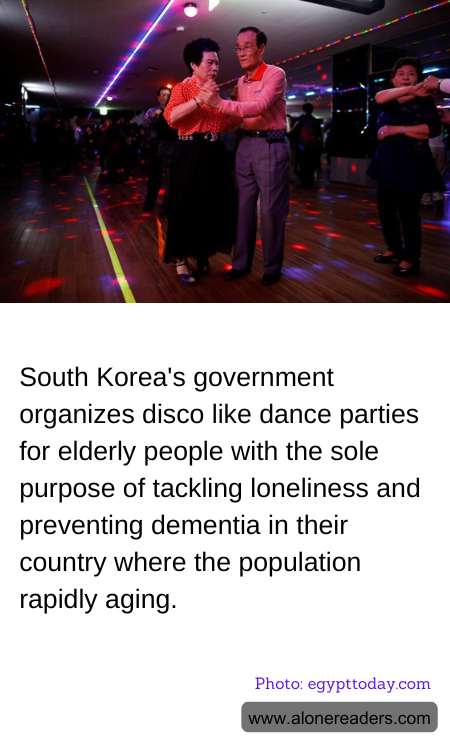
South Korea has taken an innovative approach to address the challenges posed by its rapidly aging population. With loneliness and dementia becoming increasingly prevalent among the elderly, the government has initiated a unique program to enhance the quality of life and mental health of this demographic. Disco dance parties, designed specifically for seniors, are organized across the country as a fun and engaging way to combat isolation and stimulate cognitive functions.
The vibrant dance parties are more than just social events. They serve as a preventive measure against cognitive decline, creating an environment where the elderly can engage in physical activity, socialize, and enjoy a sense of community. The initiative is based on studies showing that social interaction and physical exercise can play significant roles in delaying the onset of dementia and in alleviating the symptoms of depression and loneliness.
These gatherings often feature classic hits from the 1960s and 1970s, resonating with the attendees’ youth and encouraging them to relive their energetic days. The dance floor buzzes with activity as seniors move to the rhythms, often adorned in colorful outfits and accessories. Beyond dancing, these events sometimes include other engaging activities such as singing contests and group exercises, adding variety and catering to different interests.
The government's support for these disco parties highlights the seriousness with which South Korea is addressing the wellness of its elderly citizens. With a rapidly aging population, proactive steps such as these are critical. By providing these spirited events, the government not only enriches the senior citizens' social lives but also integrates them more fully into the community, fostering a broader societal acknowledgment of their importance.
In conclusion, South Korea’s disco dance parties are a testament to the creative solutions that can be implemented to tackle significant social and health issues. These events encapsulate a joyful resistance against the loneliness and mental decline often associated with aging, offering a blueprint that could inspire other nations facing similar demographic challenges.
