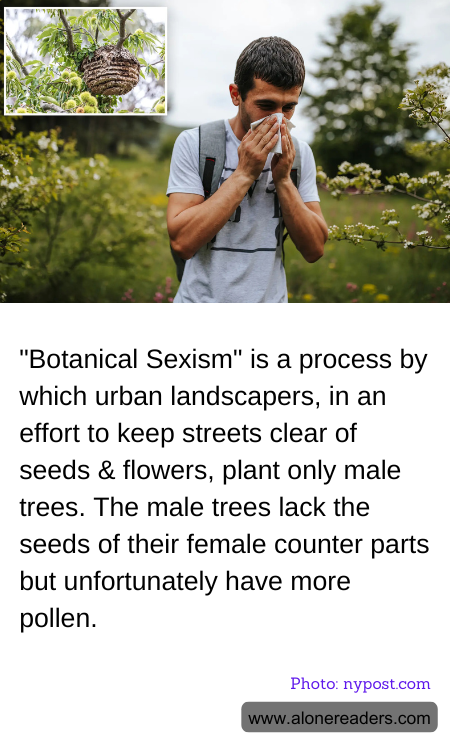
Botanical sexism occurs when urban planners and landscapers choose to plant predominantly male trees in urban environments to avoid the mess created by seeds and fruits that female trees produce. This decision, aimed at reducing the need for maintenance and keeping public spaces clean, has unintended consequences for urban air quality and public health.
Male trees produce pollen, which, unlike seeds or fruits, can travel long distances through the air. The selective planting of male trees has therefore led to an increase in pollen concentrations in many urban areas. This can exacerbate allergies and respiratory problems among city dwellers, contributing to the rising rates of conditions such as asthma and hay fever.
The concept of botanical sexism was first illuminated by horticulturist Tom Ogren who noticed the correlation between the planting of male trees and increased rates of pollen-related allergies. According to Ogren, the widespread use of male plants in landscape architecture began in the middle of the 20th century, driven by the desire to design low-maintenance urban spaces.
While the reasoning behind choosing male trees may have practical origins, the health implications are significant. Pollen from trees can dramatically affect air quality, especially during peak pollination seasons. Cities dominated by male trees can become hotspots for pollen, creating dense allergen environments that pose health risks to millions of people. This situation underscores the need for more balanced urban planting policies that consider both maintenance and environmental health.
Strategies to combat the issues arising from botanical sexism include diversifying the types of trees planted, mixing male and female trees, and choosing species that are less allergenic. Such measures not only balance the ecological makeup of urban areas but also promote biodiversity. Additionally, some cities are beginning to recognize the importance of including female trees in their planting schemes, despite the additional maintenance they may require, in order to reduce pollen levels and improve urban air quality.
Ultimately, increased awareness and strategic planning can help mitigate the effects of botanical sexism, leading to healthier, more sustainable urban environments. It’s essential for urban planners, landscapers, and environmental health professionals to work together to address these challenges and prioritize the health of city residents alongside aesthetic and maintenance considerations. The choice of city trees should be a reflection of a thorough understanding of their environmental impacts, balancing beauty and functionality with public health needs.
