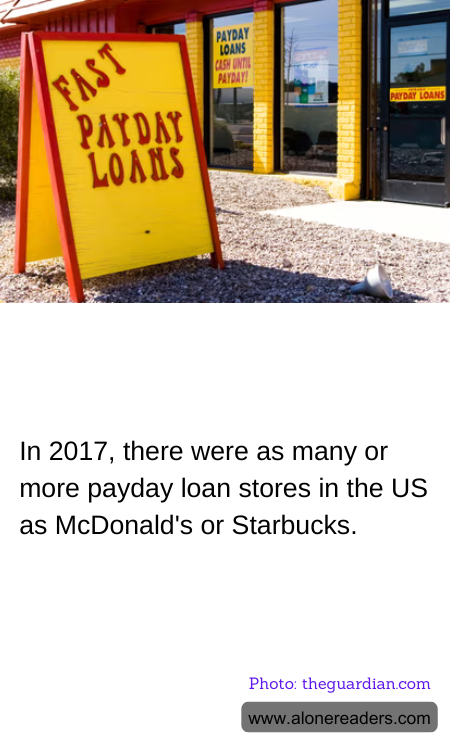
In 2017, the prevalence of payday loan stores in the United States reached a level comparable to iconic franchise brands such as McDonald’s and Starbucks, highlighting fundamental issues in consumer finance and economic distress within certain demographics. Payday loans, known for their high interest rates and short-term loan periods, became an accessible but controversial option for millions seeking immediate financial relief. This comparison with McDonald's and Starbucks, both ubiquitous symbols of American convenience, underscores the critical demand for small, often emergency-related funding options for low and middle-income Americans.
Payday lenders filled the gaps left by traditional banking institutions, which often exclude shorter-term loans or loans to individuals with lower credit scores. The growth in the number of payday loan stores mirrored the economic struggles faced by many Americans, such as living paycheck to paycheck or lacking sufficient savings for emergencies. Despite their convenience, payday loans are criticized for their predatory practices and spiraling debt impacts on borrowers, often exacerbating the financial vulnerability they aimed to mitigate.
This environment sparked a significant policy and regulatory debate about the role of payday lending in financial markets and its impact on consumer financial health. Regulatory bodies have scrutinized these businesses, leading to changes like the Consumer Financial Protection Bureau establishing rules to curb unfair practices and protect vulnerable consumers. Additionally, the scenario stresses the need for more robust financial literacy education and alternative lending models that address urgent cash-flow needs without leading to cycles of debt.
The juxtaposition of payday lenders to mainstream franchises like McDonald’s and Starbucks highlights a societal reflection on consumer needs, financial risk management, and the ethical considerations of providing finance to the underserved. As legislative frameworks evolve to guide how payday loans operate, the fundamental challenge remains: balancing immediate financial assistance to those in need and protecting them from financial practices that could endanger their economic future.
