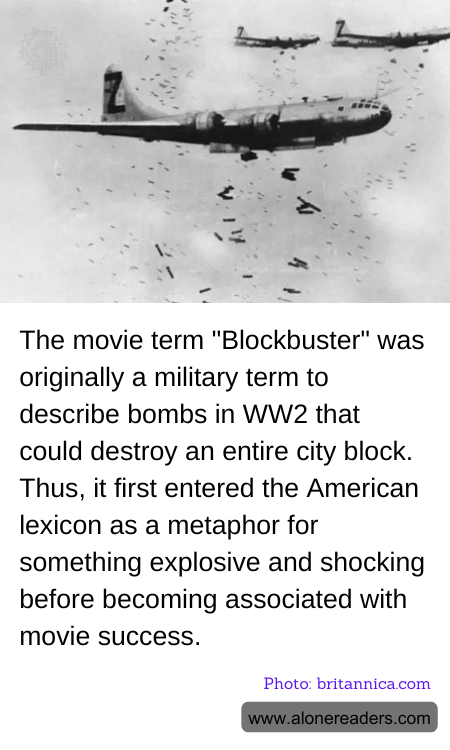
The term "blockbuster" has a dramatic history that transitions from the distressing battlefields of World War II to the sparkling lights of cinema marquees. Originally used in the military context, a "blockbuster" referred to a type of bomb developed during the war that was powerful enough to obliterate an entire block of buildings. This ability to cause sweeping, impactful destruction likened it to having a block-busting effect.
After the war, the media picked up the term, using it to describe anything particularly striking or effective. This powerful connotation was subsequently adopted by the entertainment industry. In its new context within the film industry, a "blockbuster" denoted a movie that was extraordinarily impactful — socially, artistically, and especially financially. It was used to signify films that possessed the spectacle and appeal to draw large numbers of viewers, much like how the original blockbuster bombs commanded attention for their overwhelming power.
The shift from a term of warfare to one of phenomenal success in cinema highlights not just a linguistic evolution but also a cultural shift. Recognizing a movie as a "blockbuster" speaks to its ability to attract vast audiences, generate significant box office revenue, and sometimes even establish new trends within the film industry. This metamorphosis in meaning has stuck and today, the term is synonymous with major cinematic success, often associated with big budgets, star-studded casts, and extensive marketing campaigns. Blockbusters typically aim to appeal to the broadest possible audience, maximizing their impact both culturally and commercially. As a result, the word has permanently engraved itself into not just the lexicon of cinema, but also popular culture at large, illustrating the capacity of words to transition meanings across different spheres of society.
