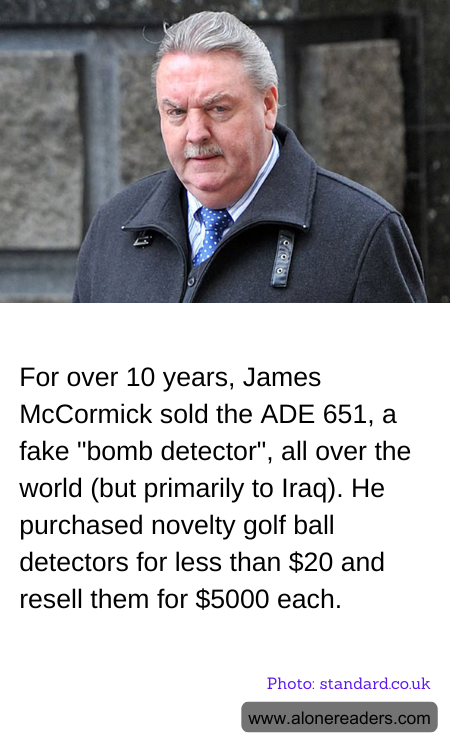
For more than a decade, James McCormick deceived international markets by selling a fraudulent device that he claimed could detect bombs. His tool, named the ADE 651, was marketed as a sophisticated piece of security equipment essential for bomb detection. In reality, the ADE 651 was nothing more than a repackaged novelty golf ball finder, which McCormick purchased for less than $20 each. He achieved staggering profits by selling each unit for up to $5,000, primarily to security forces in Iraq, among other countries.
The ADE 651 was claimed to operate on principles that defy the basic laws of physics. According to McCormick, the devices could detect explosives, drugs, and other substances from significant distances, even underground or underwater, and through walls. These claims were supported by no scientific evidence, and tests later showed that the devices were entirely ineffective, relying on random chance or the users' subconscious cues.
McCormick's fraudulent activities came under scrutiny as the security situation in regions like Iraq remained perilously unstable, despite the widespread use of the ADE 651. Investigations revealed the extent of the deception, prompting outcry and legal action. In 2013, McCormick was convicted on three counts of fraud and sentenced to ten years in prison. The case highlighted severe lapses in regulatory and procurement processes, showing how easily misleading security technology could be sold to governments desperate for solutions in conflict zones.
The repercussions of this scam were profound. Not only did it lead to significant financial losses, but it also compromised the safety of countless individuals who relied on this technology for protection against terrorist attacks. The scandal prompted calls for more stringent testing and evaluation protocols for security-related devices and sparked debates about the ethical responsibilities of suppliers in the defense and security sectors.
