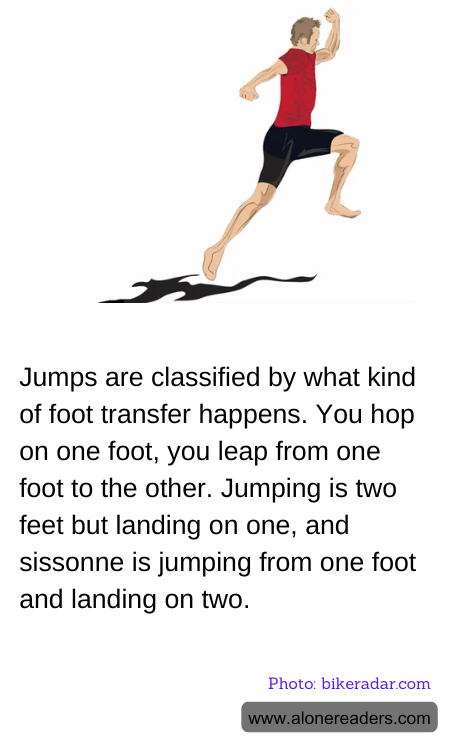
Jumps are a fundamental component of many physical activities, from dance and gymnastics to sports like basketball and track. Understanding the different types of jumps can enhance both the performance and appreciation of these movements. Each type of jump is classified based on the transfer of feet used during the action.
Hopping is the simplest form of a jump, characterized by taking off from one foot and landing on the same foot. This movement requires a significant amount of balance and strength in one leg and is often used in various children's games, such as hopscotch, and in athletic conditioning to enhance agility and leg strength.
Leaping, on the other hand, involves taking off from one foot but landing on the other. This action covers more distance than hopping and is an essential skill in ballet and other forms of dance, as well as in sports that require long-distance jumps such as the long jump event in athletics. Leaping not only tests balance and coordination but also strength and precision.
Jumping typically refers to taking off with two feet and landing on one foot. This type of jump is often seen in routines of gymnasts and dancers where a combination of height and asymmetric landing is required to transition into subsequent movements or steps. It is also used in sports, for instance in basketball when performing layups where the player jumps with both feet but lands on one to shoot.
Sissonne, a term often used in ballet, describes a more complex type of jump where the dancer takes off from one foot and lands on two feet. This movement requires great skill and control as it involves a split-second transition in the air leading to a symmetric landing. It emanates grace and fluidity, making it a favorite in classical ballet choreographies.
Each jump type serves different purposes and requires distinct techniques. Mastery of these jumps not only enhances physical capabilities but also aids in the execution of more complex and artistic movements in performance arts and sports. Understanding and practicing these jumps contribute significantly to the elegance, effectiveness, and safety of physical performance.
