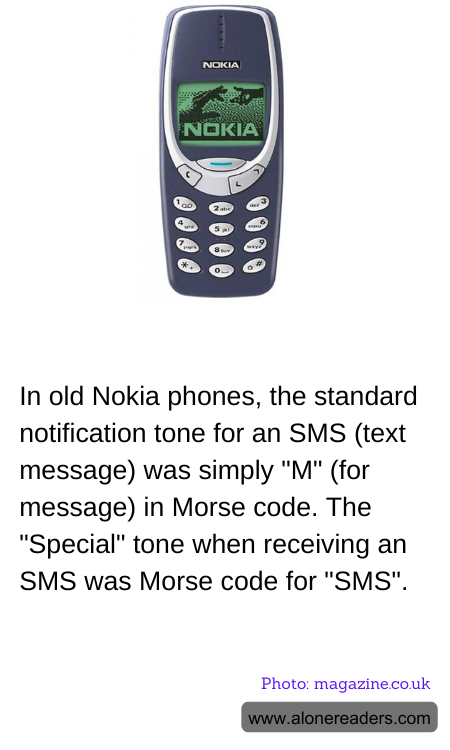
The simplicity and practicality of old Nokia phones are demonstrated not just in their durable hardware but also in their thoughtful and innovative features. Among these features was the unique choice of notification tones. The standard notification alert for an SMS (Short Message Service) text message on many old Nokia phones was the Morse code for the letter "M," which stands for "message." This choice reflects a clever use of Morse code, an early form of text communication, thereby subtly nodding to the history of telecommunications.
Moreover, Nokia also introduced a "Special" tone option for receiving text messages, which was the Morse code for "SMS." This particular choice was apt and relevant, encapsulating the essence of the service being used. Morse code, developed in the 1830s and 1840s by Samuel Morse and other inventors, was pivotal in the evolution of communication technology, effectively making it a precursor to the modern text messaging services offered by mobile phones.
These distinctive Morse code tones not only provided a quick auditory indication of incoming messages but also tied the new digital age of communication back to its historical roots. For many users, these sounds became synonymous with the Nokia brand, echoing in pockets and bags with a short and sweet reminder of a technology that once revolutionized the world—even as Nokia phones themselves were busy revolutionizing mobile technology.
Through these thoughtful features, Nokia was able to create a connection between past communication technologies and the present, while also ensuring their devices remained useful and user-friendly. Even today, the iconic tones of Nokia phones evoke a sense of nostalgia for the era when mobile phones were transforming into an indispensable part of daily life. It's a testament to Nokia's innovative approach to integrating historical elements with modern technology—a small, yet memorable, part of the broader mobile communications tapestry.
