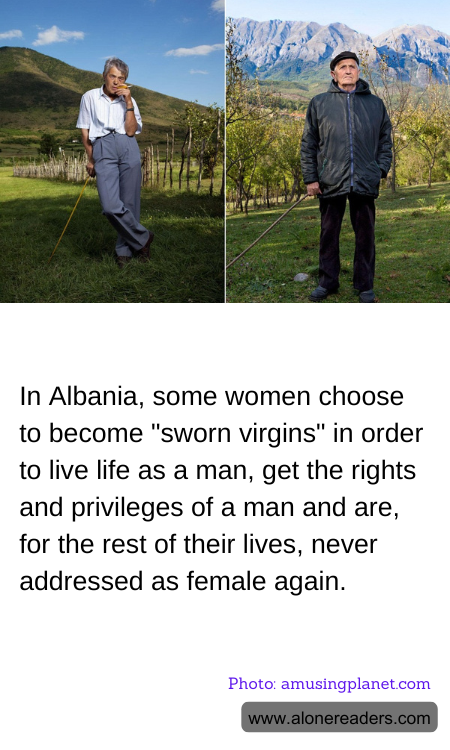
In the rugged mountain regions of Albania, an ancient customary law known as Kanun dictates not just the everyday lives of the people but also embeds a unique cultural phenomenon: the practice of sworn virgins, or 'burrnesha'. This practice allows women to choose a life where they assume the social identity of a man, a decision that brings both profound personal sacrifices and significant sociocultural benefits. These women, after taking a lifelong vow of chastity and dressing and behaving like men, are afforded the freedoms and rights typically reserved for males in these traditional Albanian societies.
The roots of this practice are steeped in the patriarchal structure of Albanian tribal society, where women are generally subjected to severe restrictions. Women traditionally have had very limited rights, often being denied the ability to work, make decisions, or inherit property. By becoming a sworn virgin, a woman steps into the role of a man, thereby gaining the right to make family decisions, manage property, and participate in village or tribal meetings. This status transformation also implies taking on male responsibilities, such as the duty to uphold family honor and partake in blood feuds, which are a recognized customary method for solving disputes in these areas.
The decision to become a sworn virgin is not taken lightly and is often driven by various factors. Sometimes, the choice arises from a necessity as simple yet crucial as ensuring that a family without a male head can continue to function within its social context. In other cases, it's a personal decision to escape the traditional roles that a patriarchal society imposes on women, including arranged marriages or domestic constraints. The sworn virgins live and die committed to their oath, which marks not just a transformation in their social functions but in their very identity.
Despite the societal respect and legal rights they gain, becoming a sworn virgin is riddled with personal complexities. Choosing a life devoid of sexual relations, marital partnership, and children is a significant sacrifice. However, many sworn virgins express a sense of pride and fulfillment in their role and the freedoms it entails. As modernity encroaches upon these traditional areas, the number of sworn virgins has dwindled, reflecting changing attitudes and increased opportunities for women. Yet, the sworn virgins of Albania remain a potent symbol of the lengths to which individuals will go to redefine their roles and rights within rigidly structured societies. Their existence is not only a fascinating cultural relic but also a poignant reminder of the enduring struggle for gender equality and the complex interplay of identity, culture, and social structure.
