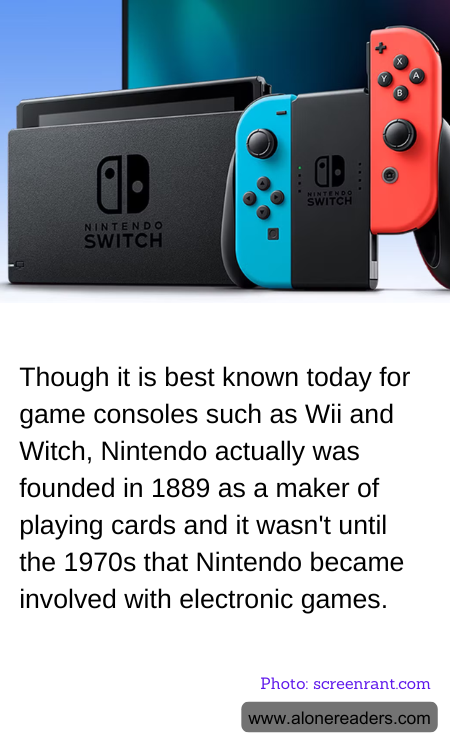
Nintendo, one of the most iconic names in the video game industry, traces its roots back to a much different era, far removed from electronic entertainment. Founded on September 23, 1889, by Fusajiro Yamauchi in Kyoto, Japan, Nintendo started as a playing card company, producing handcrafted hanafuda cards, which are used in a traditional Japanese card game. These cards were distinctively Japanese and became popular for their craftsmanship and artistry, allowing Nintendo to establish a strong domestic market presence.
The company's ventures were confined largely to card games for several decades, despite dabbling in various businesses during the mid-20th century, such as a taxi company, a love hotel chain, a TV network, and food products—most of which were unsuccessful. It wasn't until the late 1960s and early 1970s that Nintendo began to shift its focus toward the burgeoning field of electronic entertainment.
This transition was spearheaded by Hiroshi Yamauchi, the third president of Nintendo and a direct descendent of its founder. Under his guidance, Nintendo ventured into coin-operated video games. Their first venture into electronic games featured light gun games produced for arcades, which laid the foundation for later innovations. By the late 1970s, Nintendo had developed several popular arcade games, including "Sheriff" and "Space Fever," but the real game-changer came in 1981 with the release of "Donkey Kong." This game not only was a smash hit globally but also introduced characters that would become staples in the video gaming world, including Mario, who would go on to star in his series of games.
"Game & Watch," a line of handheld game consoles launched in 1980, marked another significant milestone for Nintendo, priming the market for the future success of portable gaming systems. This success fully blossomed with the launch of the Game Boy in 1989, which revolutionized mobile gaming and solidified Nintendo's reputation as an innovator. The subsequent decades saw the introduction of now-famous game consoles like the Nintendo Entertainment System (NES), the Super Nintendo Entertainment System (SNES), the Nintendo 64, and more recently, systems like the Wii, Nintendo 3DS, and the Nintendo Switch. Each of these platforms introduced technological advancements and gameplay innovations that shaped the gaming landscape.
Today, while Nintendo continues to be a dominant force in the gaming industry, it serves as an interesting study on how a company can dramatically shift its business model and industry focus yet remain successful. From a humble card company to a leading figure in the global electronic gaming industry, Nintendo’s evolution is a testament to the company’s adaptability and vision in constantly changing technological landscapes.
