More About This Card
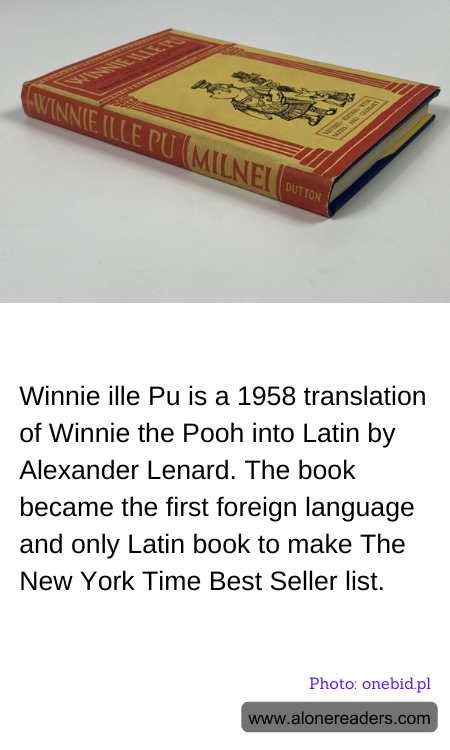
"Winnie ille Pu," the Latin translation of A.A. Milne's beloved children's classic "Winnie-the-Pooh," offers a unique twist on this timeless tale. Translated by Alexander Lenard in 1958, the book skillfully preserves the whimsical charm and playful language of the original while providing readers an opportunity to engage with the classic Latin language. Lenard's translation is notable not just for its linguistic precision but also for its ability to capture the playful spirit of the Hundred Acre Wood and its inhabitants.
The translation became a surprising commercial success, highlighting the broad appeal and enduring magic of the story. Remarkably, "Winnie ille Pu" achieved the status of being the first and only Latin book to ever appear on The New York Times Best Seller list. This achievement underscores the novelty and enduring appeal of both the character and the language. Latin, often considered the language of scholars and confined to the study of classics, was brought into a new and public light with this publication, reaching audiences who might not otherwise engage with this ancient language.
The success of "Winnie ille Pu" also speaks to the broad, universal appeal of Milne’s original work. Winnie-the-Pooh's adventures, friendships, and mishaps resonate across cultures and languages, offering themes of innocence, friendship, and the simple joys of life. By presenting these themes in Latin, Lenard not only preserved a piece of cultural heritage but also introduced it to new generations in a novel way.
The unexpected popularity of this Latin edition demonstrates the timeless nature of Winnie-the-Pooh's stories and the surprising delight that can come from experiencing familiar tales in new ways. It has inspired an appreciation for classical languages in contexts outside of academic settings, proving that even the oldest of languages can find relevance and joy in modern narratives. This adaptation stands as a testament to the power of literary classics to transcend language and cultural barriers, continually finding new ways to engage and inspire readers of all ages and backgrounds.