More About This Card
Andrew Jackson, the seventh President of the United States, was a figure mired in controversy but admired for his resolute personality and populist appeal. His tenure from 1829 to 1837 witnessed the solidification of modern American politics, including the evolution of political symbols and rhetoric. One enduring symbol that emerged from Jackson's era was the donkey, now synonymous with the Democratic Party.
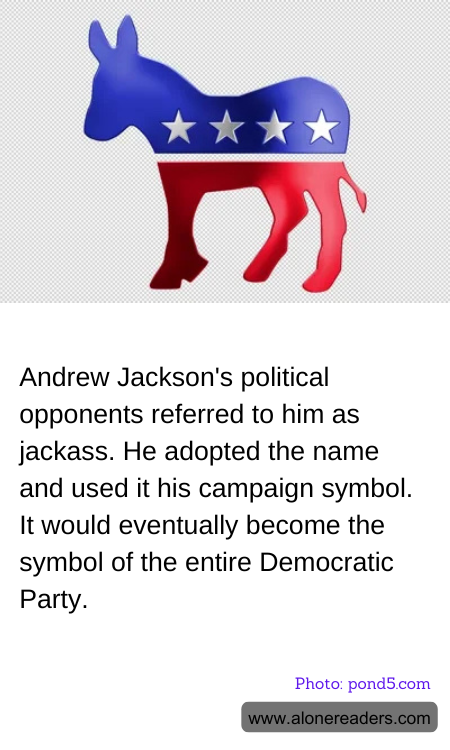
The story begins with Jackson's opponents labeling him a "jackass." This term was meant to be derogatory, playing on Jackson’s reputed stubbornness and fiery populist ideals. Rather than shy away from the insult, Jackson embraced it with a defiant spirit that matched his political style. He used the image of the strong-willed donkey in his campaign materials, turning an intended slight into a positive emblem that symbolized his determination to oppose the elitist policies he believed were prevalent in politics.
Jackson's adept turn of what might have been a damaging moniker into a symbol of strength and resilience had a lasting impact. Over time, the donkey started to represent not just Jackson himself but the Democratic Party as a whole. Political cartoons, particularly those by the famous cartoonist Thomas Nast in the late 19th century, helped cement the donkey as a recognized symbol for the party. Nast also contributed to the adoption of the elephant as a symbol for the Republican Party, thus continuing the animal representation trend in American politics.
Interestingly, while the donkey has technically never been officially adopted by the Democratic Party as its symbol, it has been widely embraced due to its endurance and ubiquitous presence in political discourse and imagery. The party and its supporters find in the donkey a spirited, intelligent, humble, and brave creature, reflecting the traits they aspire to embody.
Hence, what started as an insult in the fiery cauldron of Jacksonian America evolved into a powerful symbol of political identity, illustrating how symbols can transform in meaning depending on their context and usage. Over years, this practice helped shape the narrative style and symbolic language of U.S. political culture, demonstrating that even in politics, sometimes a clever response to criticism can turn the tables entirely.