More About This Card
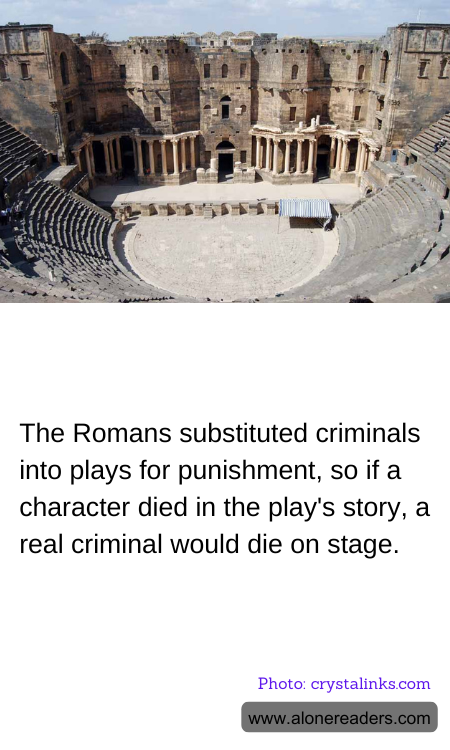
In ancient Rome, theatre was not just a form of entertainment but also a canvas for the state's authority and moral codes to be displayed and affirmed. Among the many peculiar and brutal practices of the Roman civilization was the involvement of actual criminals in theatrical productions, particularly in plays where their execution could be staged as part of the live performance. This blending of reality and dramatic fiction was an extreme method of capital punishment, designed not only to serve justice but also to deliver a visceral spectacle to the Roman audiences.
The practice of substituting criminals in plays where the plot called for execution served multiple societal and political purposes. Primarily, it acted as a deterrent, a stark warning to those who might consider committing crimes. It also satisfied the public's appetite for spectacle and the macabre, an appetite that was also catered to by gladiatorial combat and public executions in the arena. Roman society had a complex relationship with death and violence, often turning executions into public spectacles. In this context, the theatre became another arena where life and art intersected in the most literal and fatal ways.
Theater in ancient Rome was deeply intertwined with its political and social fabric, reflecting the values, conflicts, and beliefs of its time. This gruesome practice of killing criminals on stage highlighted the Romans' strong inclination towards legalism and order, as well as their tendencies towards extreme punishments and a public affirmation of state power. Though morally incomprehensible today, these acts were part and parcel of a society that was simultaneously highly civilized and extraordinarily brutal.
Although this particular aspect of Roman culture may appear to modern eyes as horrific, it is a testament to the complex layers of Roman society, where the boundaries between entertainment, justice, and ritual could blur dramatically. It also speaks to the transformative power of theater as a tool for societal reflection and control, a place where the stories played out on stage could intersect profoundly and fatally with real lives, serving as a chilling reminder of the consequences of crime in the Roman world.