More About This Card
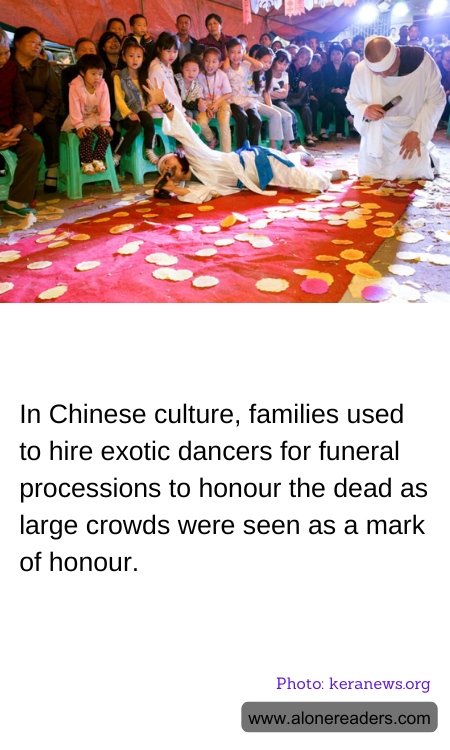
In traditional Chinese culture, funerals are more than just an occasion to mourn the deceased; they are a way to celebrate the life they lived and to ensure their departure from the world is as honorable as possible. One of the more striking practices historically associated with Chinese funerals, especially in rural Taiwan, is the hiring of exotic dancers or striptease groups to perform during the procession. This custom, indicative of the combination of solemnity and celebration in Chinese funeral traditions, is rooted in the belief that attracting large crowds to a funeral is a sign of honor for the departed.
The practice involves dancers performing on electric flower cars (parade floats equipped with loudspeakers and neon lights), which travel with the funeral procession through the streets. The logic behind this unusual method of mourning is tied deeply to Confucian ideals of filial piety and respect to one's ancestors. It was believed that the larger the crowd drawn to a funeral, the greater the honor bestowed upon the deceased, ensuring them a more favorable transition to the afterlife. Thus, the entertainment not only served to pay respects to the dead but also to celebrate their life in a manner that would gather the most attendees.
Over the decades, the presence of exotic dancers at funerals has faced scrutiny and changing societal perceptions. Modernization and changing religious and ethical landscapes have led to a decline in these practices, especially in urban areas, where traditional beliefs have blended with contemporary values. Additionally, local governments in both China and Taiwan have at various times sought to crack down on such performances, citing public morality concerns.
However, in some rural areas, these customs persist, reflecting a deep-seated traditional view of death and the afterlife that underscores the importance of legacy and remembrance. This distinct approach to mourning emphasizes that cultural practices are diverse and that the expression of grief and remembrance can take various forms, each deeply rooted in the cultural fabric of the community. While to outsiders the practice may seem unconventional, it is a poignant reminder of the rich tapestry of beliefs and rituals that define human cultures around the world.