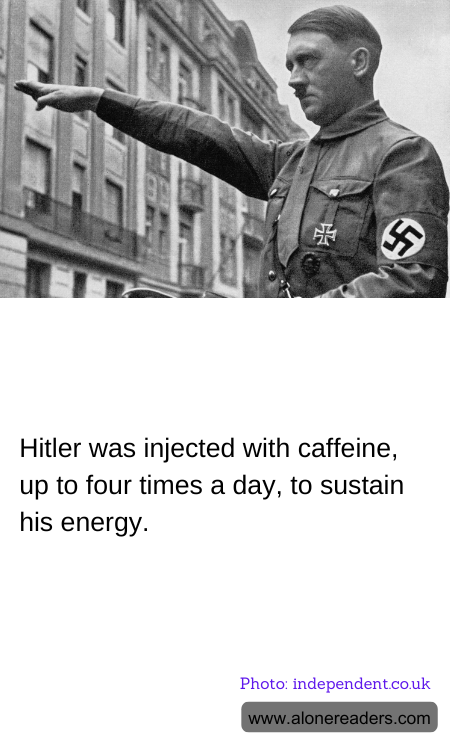
Adolf Hitler's personal health regimen has been a subject of historical curiosity and extensive study. Among the many details that have surfaced about his medical treatment is the fact that he was administered regular injections by his personal physician, Dr. Theodor Morell. These treatments weren't limited to just caffeine; they included a bizarre cocktail of vitamins, hormones, and indeed, potent stimulants such as methamphetamine, which is more well-known by its street name, crystal meth.
The injections that included caffeine were just one part of a broader array of treatments. Hitler's reliance on these injections increased as the pressures and stresses of leading Nazi Germany during World War II took their toll on his health. It was reported that his daily regimen included up to four injections as a way to sustain his energy through hectic and sleep-deprived days. This heavy reliance on stimulants showcases a side of Hitler that is fraught with contradictions, given the regime's public stance against drugs.
This aspect of Hitler's medical care raises questions about the impact of such substances on his psychological state and decision-making. While caffeine is a relatively mild stimulant, the combination of multiple, more potent drugs could have had significant effects. Historians and medical experts have speculated that Hitler's increasingly erratic behavior, paranoia, and poor military decisions as the war progressed might have been influenced, at least in part, by his excessive drug use.
His physician, Dr. Morell, who had initially gained Hitler's trust and confidence, became an essential figure in the dictator's inner circle, primarily due to his ability to keep Hitler energized and, ostensibly, focused. However, Morell's unconventional medical practices were viewed with suspicion and disdain by many of Hitler’s other close aides and military officials.
This use of stimulant injections, including caffeine, to maintain Hitler's energy exemplifies an often-overlooked facet of historical leadership and provides a cautionary tale about the potential pitfalls of dependency on chemical substances for performance enhancement. It paints a picture of a leader whose declining health and potential substance abuse issues intertwined tightly with the critical decisions of the time, possibly to the detriment of his own military and political objectives. This underlines the complex interplay between leadership, health management, and historical outcomes in times of crisis.
