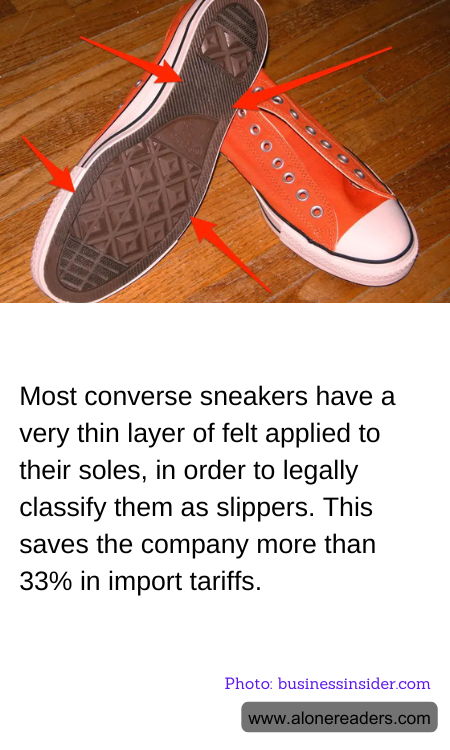
Converse sneakers, a staple in both fashion and athletic wear, have incorporated a clever design element that impacts not only the shoe’s classification but also the economic intricacies of its importation. Interestingly, many Converse sneakers feature a thin layer of felt on their soles. This subtle manufacturing choice is significant because it allows the shoes to be classified as slippers rather than regular shoes under tariff regulations.
The primary motivation behind this design feature is economic. By classifying their products as slippers, Converse can benefit from substantially lower import tariffs. Specifically, the tariff rate for importing slippers into certain countries can be more than 33% lower than that for shoes. This represents a significant cost saving on the importation of thousands of pairs of sneakers, which can then potentially be passed on to consumers in terms of lower prices.
This tariff classification trick is an intriguing example of how footwear companies navigate complex international trade laws to optimize their operations. However, it also raises questions about the definition and classification standards used in international trade policies. The layer of felt does not alter the basic function or appearance of the sneakers, yet it provides a loophole that has financial benefits.
This practice of tariff engineering, where products are slightly modified to achieve more favorable tariff rates, is not uncommon among manufacturers looking to maximize their profitability in a competitive global marketplace. While entirely legal, such practices can sometimes lead to discussions on the need for reforms in tariff classifications to close loopholes and ensure fair competition.
In the case of Converse and other similar brands, consumers remain largely unaware of these behind-the-scenes adjustments. Nonetheless, these tactical moves in product design and classification reflect a complex interplay of fashion, function, and finance, illustrating how even the simplest products are subjects of strategic international economic considerations.
