More About This Card
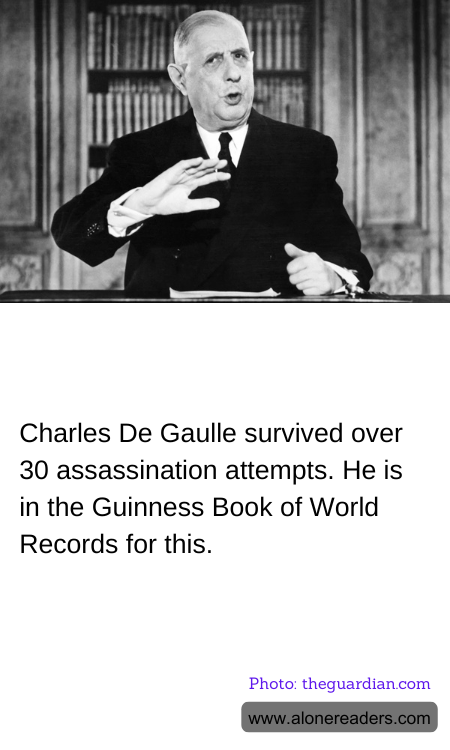
Charles de Gaulle, one of the most prominent figures in French history, is notable not just for his leadership during critical periods, but also for surviving more than 30 assassination attempts, a record that has earned him a place in the Guinness World Records. As the founder of the Fifth Republic and its first President, de Gaulle's policies and authoritative leadership style sparked significant controversy and opposition, leading to numerous plots against his life.
One of the most famous attempts on his life occurred on August 22, 1962, known as the Petit-Clamart incident. This well-organized ambush was orchestrated by the Organisation armée secrète (OAS), a paramilitary group that vehemently opposed de Gaulle's policies towards Algeria, particularly his support for Algerian independence. As de Gaulle's car traveled through the Paris suburb of Petit-Clamart, the OAS militants unleashed a barrage of bullets. Remarkably, de Gaulle and his wife, Yvonne, escaped without injury, largely due to the skillful driving of de Gaulle’s chauffeur and the president's unflinching calm under fire.
The numerous attempts on his life, both from within France and from external groups, underline the extreme divisions and tensions within France during his presidency, particularly over colonial policies and his vision for an independent France, free from the influence of superpowers like the USA and USSR. Despite these constant threats, de Gaulle remained resolute in pursuing his vision for the country.
De Gaulle's survival of so many assassination attempts has been attributed to a combination of good fortune, tight security measures, and his remarkable personal composure during attempts on his life. These incidents added to his mythos, portraying him as a leader seemingly destined to withstand all trials and push forward his agenda for France. His tenure not only dramatically shaped France's political landscape but also entrenched de Gaulle as a figure symbolic of resilience and unwavering patriotism. In this way, his numerous escapes from assassination have contributed to his enduring legacy as a central figure in modern French history.