More About This Card
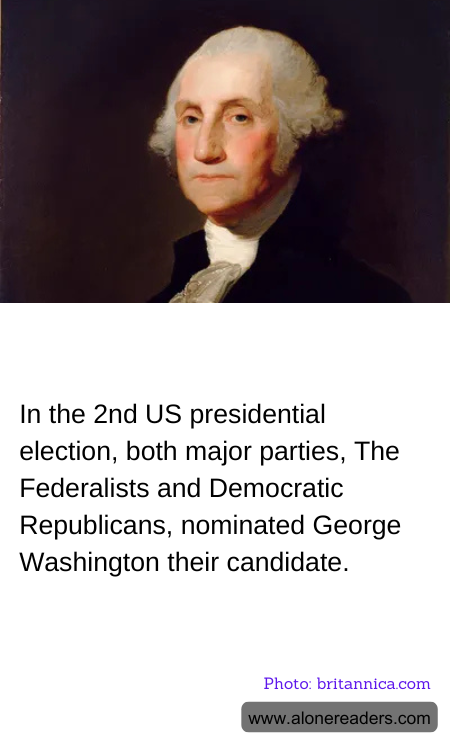
The 2nd U.S. Presidential Election, held in 1792, stands out in American political history for its unique display of national unity, particularly in the context of presidential nominations. Despite emerging political divisions, both of the major political factions of the time, the Federalists and the Democratic-Republicans, endorsed George Washington for a second term. This unanimous support underscores Washington's unparalleled stature and the general consensus about his leadership during the nation's formative years.
George Washington was seen by many as an indispensable leader, whose leadership had steered the country through the tumultuous times following independence. By the time of the 1792 election, political ideologies were beginning to surface, leading to the formation of the Federalist Party, which broadly favored a strong central government and was led by figures like Alexander Hamilton. On the other hand, the Democratic-Republicans, led by Thomas Jefferson, advocated for more power to be given to the states, favoring a more decentralized federal structure.
Despite their growing ideological differences, both parties viewed Washington’s presidency as crucial for the stability and growth of the newly formed nation. His leadership was considered a unifying factor that could transcend emerging partisan divides. Washington's decision to accept the nomination for a second term was largely influenced by a sense of duty to his country, despite his desire to return to private life at Mount Vernon.
The election itself was more a formality than a contest, as Washington was universally accepted and admired. He received all 132 electoral votes, reaffirming his widespread approval. John Adams was re-elected as Vice President, coming in second in electoral votes, which was the procedure at the time, where the runner-up in the presidential race would win the vice presidency.
This phenomenon of both parties nominating a single candidate displays an early example of national unity and the high esteem in which Washington was held. It also set a precedent for non-partisan or bipartisan leadership ideals, aiming for national cohesion over sectional or party interests. However, the calm of the 1792 election belied the intensifying political partisanship that would soon characterize American politics, as ideological differences continued to crystallize, leading to more distinctly contested elections in the future.