More About This Card
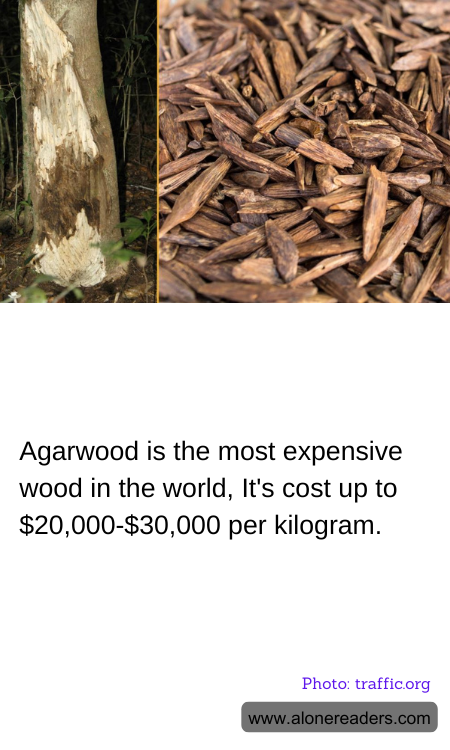
Agarwood, also known as "oud," is indeed one of the most valuable natural resources on the planet. This precious wood, which can cost between $20,000 and $30,000 per kilogram, is treasured for its rich, musky scent and has been used for centuries in traditional medicines, high-quality incense, and luxury perfumes. The source of agarwood's value lies in its rarity and the unique process through which it develops.
Agarwood is derived from the resinous heartwood of aquilaria trees, which grow in various parts of South East Asia, including India, Thailand, Cambodia, and notably, Indonesia. These trees produce a fragrant resin in response to fungal or bacterial infection. When the tree is infected, it secretes a resin to combat the infection, which gradually embeds within the heartwood. Over time, this results in the dark, aromatic heartwood known as agarwood. Not all aquilaria trees produce this precious resin; it's estimated that less than 10% of mature trees do so, which makes agarwood exceedingly rare.
The extraction and harvest of agarwood is a delicate process. Trees must be of a certain age and typically infected naturally, although there are now methods to artificially induce the production of resin. Once harvested, the wood is often distilled into an oil used in perfumery, or carved into pieces for burning as incense. The scent of agarwood is complex and can vary significantly depending on the exact species of tree, the specific conditions under which it was grown, and how it was harvested and treated post-extraction.
Due to its high value and the increasing demand, particularly from the Middle East and China, agarwood has become a target for poachers and illegal traders. Overharvesting has led to a serious depletion of wild aquilaria trees, pushing them towards extinction and enlisting them in the Convention on International Trade in Endangered Species of Wild Fauna and Flora (CITES) to help regulate its trade and ensure sustainability.
The captivating history and cultural significance of agarwood, coupled with its scarcity, continue to drive its high market value. For centuries, it has been a symbol of wealth and luxury in many cultures. Its distinct fragrance continues to be a key ingredient in the luxury perfume industry, making agarwood a timeless treasure of nature. As awareness of its value and vulnerability grows, efforts to conserve and sustainably manage aquilaria forests are increasing, ensuring that future generations can also enjoy and benefit from this extraordinary natural resource.