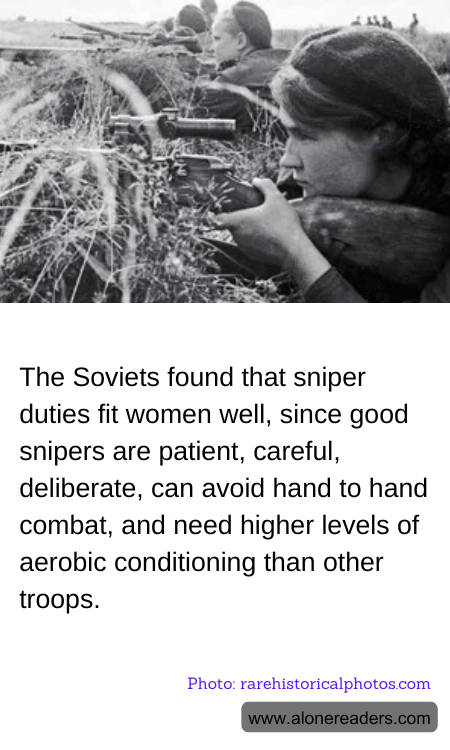
During World War II, the Soviet Union became renowned for deploying female snipers throughout its military forces based on certain observed strengths that aligned well with the demands of sniper duties. Traditionally, sniping requires a particular set of skills and physical attributes. Among these, patience, precision, and the ability to remain calm under pressure are paramount. Women were found to excel in these areas, bringing a careful, deliberate approach to sniper roles, which could sometimes involve long periods of waiting and observing in a tense environment.
Additionally, the role of a sniper often avoids direct hand-to-hand combat, focusing instead on long-range combat situations. This aspect made the position suitable for women who might have been at a physical disadvantage in close-quarters combat against typically larger male counterparts. The endurance required for sniping — sometimes remaining motionless for hours with minimal resources — also aligned well with the higher aerobic conditioning often found in female soldiers. This conditioning allowed female snipers to maintain focus and precision over long periods.
The utilization of female snipers not only broadened the military capabilities of the Soviet army but also played a key role in shifting traditional gender roles in the military context. Notably, figures such as Lyudmila Pavlichenko became symbols of this integration; Pavlichenko was credited with 309 kills, making her one of the top military snipers of all time. The success of female Soviet snipers during WWII demonstrated the strategic advantage of incorporating women into various combat roles, challenging pre-existing norms and setting precedents for future military practices. This strategic placement of women in roles that suit their strengths showcased an innovative approach to maximizing the effectiveness of the military forces during critical times of warfare.
