More About This Card
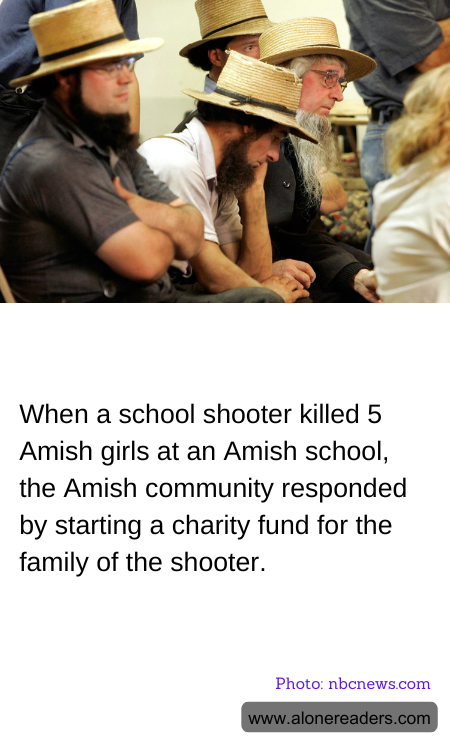
In October 2006, a devastating event unfolded at the West Nickel Mines School, a one-room Amish schoolhouse in Lancaster County, Pennsylvania. Charles Roberts, a 32-year-old milk truck driver, entered the school and fatally shot five young Amish girls, while injuring five others before taking his own life. This incident plunged the Amish community into deep sorrow, yet their response was unexpectedly profound and garnered worldwide attention.
In the face of such unspeakable tragedy, the Amish community exhibited an extraordinary display of forgiveness and compassion. Instead of harboring resentment or calling for vengeance, they reached out to the shooter's family. The Amish elders visited and comforted Roberts' widow and his children, extending unconditional forgiveness to the family. They expressed empathy, understanding the immense pain that the family of the shooter must have been experiencing as well.
Moreover, the Amish community did not stop at mere visits and comforting words. They took a further step by setting up a charitable fund not only for the families of the victims but also for the family of the shooter. Contributions were made to support Roberts' widow and children, helping them to cope with the financial and emotional fallout of the tragedy.
This response was rooted deeply in the Amish values of forgiveness, compassion, and community support. The Amish belief in forgiveness is a fundamental aspect of their Christian faith; they believe that as God forgives them, so too must they forgive others, no matter the circumstance. Their actions were a powerful testament to these beliefs, serving as a poignant example of unconditional forgiveness.
Media and public reactions to the Amish's response were mixed, with many expressing admiration for their grace and forgiveness, while others struggled to understand how they could forgive such a heinous act. Nonetheless, the Amish community remained steadfast in their approach, focusing on healing and reconciliation rather than allowing the seeds of anger and vengeance to take root.
The legacy of the Nickel Mines shooting and the Amish response to it continues to inspire discussions on forgiveness and recovery in the face of tragedy. Schools, communities, and individuals reflect on this example when confronted with violence and seek ways to foster resilience and compassion as pathways forward. The Amish community's actions remind us of the power of forgiveness and the impact of empathy in the darkest of times.