More About This Card
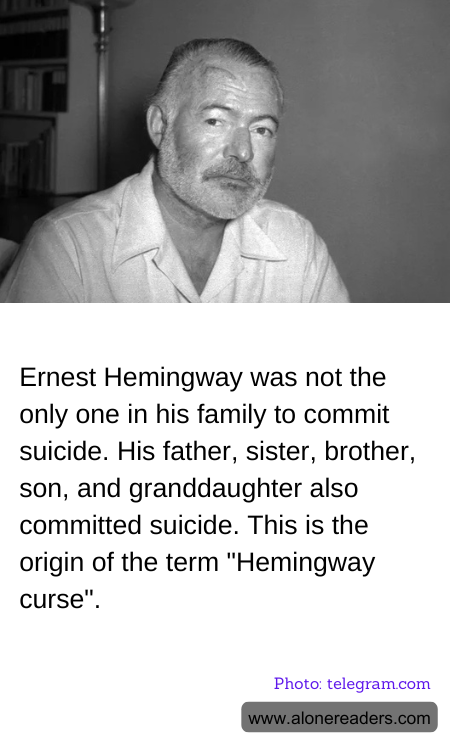
The "Hemingway Curse" refers to the pattern of suicides within the family of the renowned American author Ernest Hemingway, suggesting a tragic legacy that has sparked both literary and psychological analyses. Ernest Hemingway himself, a Nobel Prize-winning author known for works such as "The Old Man and the Sea" and "A Farewell to Arms," committed suicide in 1961 with a shotgun, following a period of depression and deteriorating health. Hemingway’s father, Clarence Hemingway, had earlier taken his own life in 1928, also using a firearm, in the wake of financial difficulties and struggles with diabetes and angina.
This pattern of self-inflicted death continued in Hemingway's immediate family. His sibling, Ursula Hemingway, died of a drug overdose in 1966, and his brother Leicester also committed suicide in 1982. Gregory, Hemingway's son, struggled with mental health issues and died in a prison cell in 2001, with his death ruled as suicide.
Beyond Hemingway’s immediate descendants, his granddaughter Margaux, an actress and fashion model, struggled with the pressures of public life and substance abuse before her life too ended by suicide in 1996.
Psychologists and literary critics have speculated on the possible influence of genetic predisposition to mental health issues such as depression within the Hemingway family, alongside the pressures of living up to a public figure as iconic as Ernest Hemingway. Others suggest that the family's history with suicide has exacerbated a mythical or perceived inevitability, impacting the family’s psychological state across generations.
The term “Hemingway Curse” encapsulates this complex tapestry of personal, familial, and perhaps hereditary struggles with mental health, set against the backdrop of creative brilliance and public scrutiny. This tragic aspect of the Hemingway legacy is often discussed in the broader context of examining the connections between creativity and mental illness, revealing the profound and often painful inner lives hidden behind a mask of literary success.