More About This Card
The Amazon River, one of the most voluminous rivers in the world, plays a significant role in the hydrology and ecology of the surrounding regions and far beyond. Its influence extends out into the Atlantic Ocean, where it discharges an average of approximately 209,000 cubic meters per second of freshwater. This immense volume of water is so great that it drastically reduces the salinity of the ocean in the surrounding area, creating a unique environmental phenomenon.
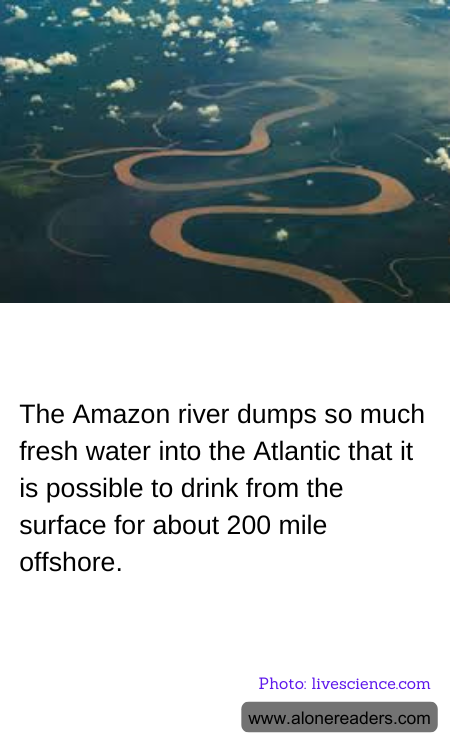
Remarkably, this dilution of seawater by the Amazon's freshwater is so extensive that it is possible to drink from the ocean's surface up to about 200 miles offshore. This area is often referred to as the "Amazon Plume." The freshwater, loaded with sediments from thousands of miles inland, creates a distinct and less saline layer on the surface of the Atlantic. This plume not only alters the salinity but also affects the oceanic temperature and currents in its vicinity.
The impact of the Amazon River on the Atlantic Ocean also has significant ecological implications. The reduced salinity and the nutrients carried by the river waters promote the growth of biologically diverse marine ecosystems. These nutrients support a variety of marine life, from tiny phytoplankton to larger fish and mammals, creating a vibrant, biodiverse area that is crucial for both local and migratory species.
Furthermore, the interaction between the fresh water of the Amazon and the saline Atlantic waters influences climate patterns and oceanic circulation. This interaction helps drive major currents which, in turn, affect weather systems across the globe.
The phenomenon of drinking freshwater far into the ocean is not just a curiosity but highlights the profound influence terrestrial bodies of water have on marine environments. It underscores the interconnectedness of our planet's ecosystems, from riverine to oceanic, and the far-reaching effects of natural processes that originate deep within continents.