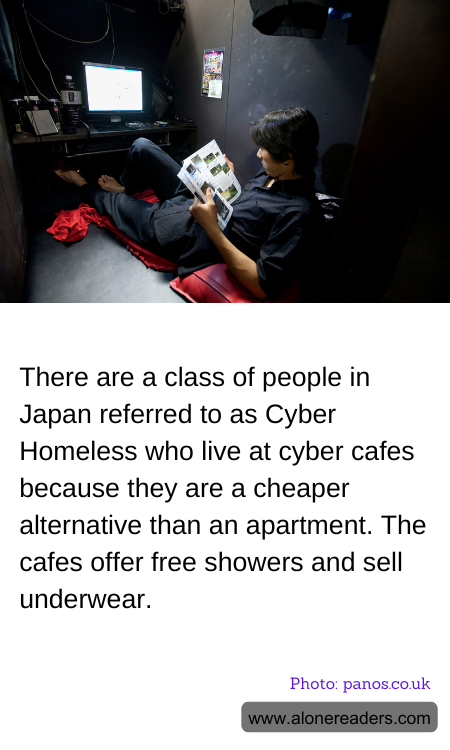
In Japan, a unique sociocultural phenomenon termed the "Cyber Homeless" has emerged, showing a different facet of the nation's struggle with affordable housing and the evolving lifestyle choices of its citizens. These individuals, often young men, find refuge in 24-hour internet cafes or "manga cafes" instead of traditional housing. Japan’s notoriously high cost of living, particularly in major cities like Tokyo and Osaka, propels these individuals toward such unconventional living arrangements. These cyber cafes have adapted to cater to this demographic, offering amenities such as free showers, personal lockers, and even essentials like underwear, making the cafes a more viable long-term option.
The interior of these cyber cafes is typically divided into private or semi-private booths, each equipped with a computer, Wi-Fi, and sometimes a television. For a relatively low nightly fee, customers can stay indefinitely, with the added benefits of unlimited internet access and beverages, further attracting their stay. This lifestyle choice is often driven not just by economic necessity but also by the isolation and independence it affords, distancing individuals from the societal pressures and familial expectations prevalent in Japanese culture.
This emerging trend highlights the broader housing and employment challenges in Japan, including stagnant wages and precarious job markets, which particularly affect young adults. The government and social organizations have increasingly acknowledged the issue of the Cyber Homeless, recognizing that their existence points to a need for more comprehensive social support systems and affordable housing initiatives. Addressing these root causes is critical in ensuring that all citizens can afford not just to live, but to thrive in a society that cares for each of its members. This demographic shift underscores a critical reevaluation of urban living and social welfare in one of the world's most advanced economies.
