More About This Card
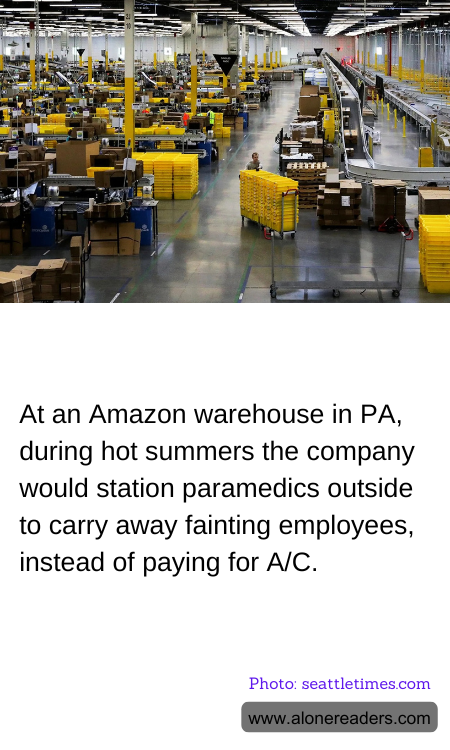
In the sweltering summer months at an Amazon warehouse in Pennsylvania, the company's approach to managing workplace temperature conditions raised significant concerns and criticisms. Instead of installing air conditioning systems to combat the extreme heat, Amazon opted for a seemingly less effective solution: stationing paramedics outside the facility to tend to employees who might suffer from heat-related illnesses such as fainting or heat exhaustion.
This practice highlighted a critical issue regarding workplace safety and employee welfare. The decision not to provide air conditioning, a basic need during intense heat waves, ostensibly placed financial considerations over the well-being of workers. Employees, required to perform physically demanding tasks, found themselves in a precarious situation where their health was at risk due to potentially dangerous temperatures within the warehouse.
The impact of such working conditions cannot be underestimated. High temperatures can lead to severe health problems, including dehydration, heatstroke, and other serious conditions that could have long-term health implications. The presence of paramedics, although potentially life-saving in acute situations, did not address the root cause of the risk – the excessively hot working environment. Moreover, this approach could be seen as reactive rather than proactive, providing a short-term solution to what was clearly an ongoing issue.
Critics argue that relying on emergency medical services instead of creating a safer work environment indicates a lack of commitment to employee health and safety standards. The situation at the Pennsylvania warehouse sparked discussions about the responsibilities of employers to provide safe and humane working conditions and raised questions about the adequacy of existing labor laws and regulations to protect workers.
Ultimately, this scenario at the Amazon warehouse serves as a crucial example of how companies should prioritize the health and safety of their employees, especially as climate change leads to more frequent and severe heatwaves. It also underscores the necessity for comprehensive policies and regulations that require employers to maintain work environments that do not pose risks to the health of their employees, ensuring that workers are not only productive but are also working under conditions that respect their well-being and dignity.