More About This Card
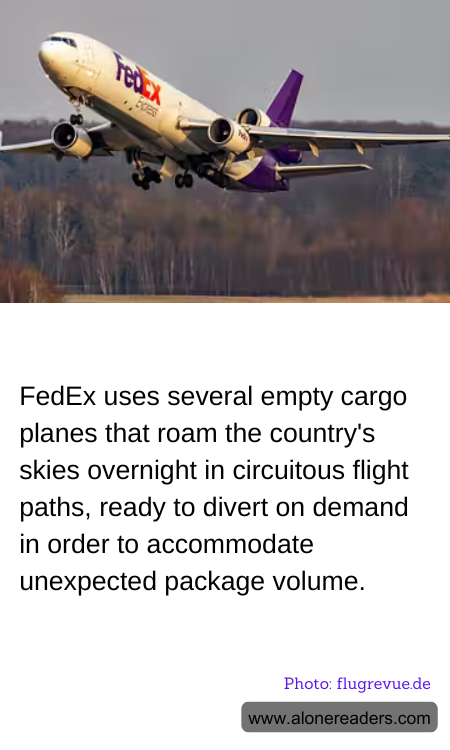
FedEx, a global leader in express logistics, employs a unique strategy to maintain its well-known promise of timely deliveries: deploying empty cargo planes that roam the country’s skies overnight. These "sweeper" aircraft follow indirect routes and stand ready to divert to various locations at a moment's notice. This strategic approach specifically caters to unexpected increases in package volume, ensuring that FedEx can accommodate last-minute shipment surges without significant delays.
The operational choice to use these roving planes is driven by the company's commitment to reliability and efficiency. By having empty aircraft in motion, FedEx can rapidly respond to dynamic logistic demands, channeling additional resources to hubs experiencing overflow or capacity strain. This method stands out in the logistics industry, showcasing an advanced level of logistical fluidity that strengthens FedEx’s network against potential disruptions caused by weather, sudden demand spikes, or logistical bottlenecks.
Moreover, this strategy underscores a significant investment in customer satisfaction and operational excellence. While having planes fly without cargo might seem inefficient at first glance, the long-term gains in flexibility and service reliability justify the expense. It allows FedEx to uphold its competitive edge in a market where delayed deliveries can lead to significant business repercussions for customers, particularly in critical supply chains and time-sensitive industries such as healthcare and manufacturing.
The implementation of sweepers in FedEx’s logistical operations highlights innovative approaches in modern supply chain management, adapting traditional practices to meet contemporary demands. This proactive measure reflects a broader trend in logistics towards using technology and strategic planning to enhance service delivery, demonstrating how companies can leverage their resources to adapt to an ever-changing global marketplace. Through such strategic foresight, FedEx continues to strengthen its market leadership and reshape how logistics companies manage global supply chains.