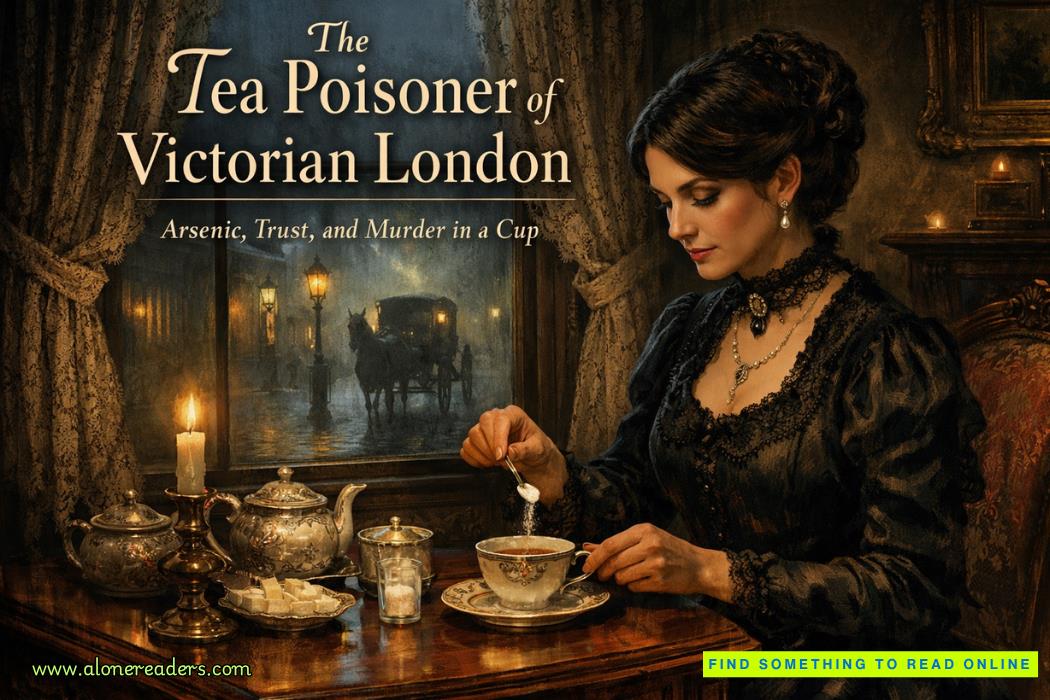
Victorian London was a city of contradictions—a metropolis of scientific advancement and industrial wealth, yet also a landscape of quiet desperation, rigid social structures, and invisible dangers. Among the most insidious threats was not the violence of the street or the squalor of the slums, but the silent, domestic act of poisoning. In an era where tea was not merely a beverage but a ritual embedded in the fabric of daily life, it became the perfect medium for murder. The phenomenon of the “tea poisoner” emerged not as a single notorious figure, but as a chilling pattern of crimes that exploited trust, routine, and the limitations of contemporary forensic science.
Tea, by the mid-19th century, had become a universal social equalizer in Britain. It crossed class boundaries, from aristocratic drawing rooms to working-class kitchens. Its preparation was often entrusted to women, reinforcing its association with domestic safety and care. This cultural positioning made tea an ideal delivery mechanism for poison. Unlike alcohol, which might be consumed in public or shared spaces, tea was intimate. It was offered, prepared, and consumed within the home, often between individuals who trusted one another implicitly. This intimacy created the perfect conditions for a poisoner to operate undetected.
The most commonly used toxin in these cases was arsenic—specifically arsenic trioxide, a white, odorless, and nearly tasteless powder that dissolved easily in hot liquids. Arsenic was widely available in Victorian England, sold openly in chemist shops for use in rat poison, agricultural pesticides, and even certain industrial processes. Its accessibility was compounded by lax regulations, which required little more than a signature in a poison register—if even that. For a determined individual, obtaining a lethal dose was neither difficult nor suspicious.
The physiological effects of arsenic poisoning were both a curse and a blessing for the perpetrator. Symptoms included vomiting, diarrhea, abdominal pain, and general weakness—conditions that closely mimicked common illnesses of the time such as cholera or food poisoning. In a city where sanitation was poor and disease was rampant, sudden illness rarely raised immediate suspicion. Victims often deteriorated over hours or days, allowing the poisoner to maintain a façade of concern and care, further deflecting attention.
What makes the concept of the “tea poisoner” particularly disturbing is not just the method, but the psychological landscape in which these crimes occurred. Many cases involved spouses, family members, or close acquaintances. Financial motives were common—life insurance policies, inheritance disputes, or the desire to escape an unhappy marriage. In some instances, the poisoner was a woman trapped within the constraints of Victorian domesticity, lacking legal or social avenues for independence. Poison became a tool of agency, albeit a deadly one.
One of the defining characteristics of these crimes was their incremental nature. Rather than administering a single fatal dose, poisoners often employed repeated, smaller quantities over time. This approach minimized the risk of immediate detection and allowed the symptoms to appear as a prolonged illness. The victim’s gradual decline could be attributed to natural causes, especially if a doctor was called only in the later stages. This method also gave the poisoner opportunities to observe, adjust, and ultimately control the outcome.
The investigative challenges of the time cannot be overstated. Forensic toxicology was in its infancy, and while tests for arsenic existed—most notably the Marsh test developed in 1836—they were not universally applied or understood. The process required specialized knowledge and equipment, and results could be contested in court. Moreover, the cultural reluctance to suspect domestic foul play often delayed investigations. The idea that a wife might poison her husband, or a daughter her parent, conflicted with deeply held societal norms.
Despite these obstacles, several high-profile cases began to shift public perception and legal practice. As awareness grew, so did scrutiny. Chemists were increasingly required to document sales of poisonous substances, and the legal system began to take poisoning more seriously as a distinct category of crime. The archetype of the poisoner evolved in the public imagination—from a shadowy anomaly to a recognized threat lurking within the home.
The gender dynamics of these cases are particularly noteworthy. While men certainly committed poisonings, women were disproportionately represented among those accused and convicted of arsenic-related murders. This was not merely a reflection of criminal behavior, but also of opportunity and societal roles. Women were typically responsible for food and drink preparation, giving them both access and plausible deniability. Additionally, the non-violent nature of poisoning aligned with contemporary notions of femininity, making it a method that could be employed without immediate suspicion.
However, this same alignment also led to a moral panic. Victorian society began to grapple with the unsettling possibility that the very individuals entrusted with care and nurturing could harbor lethal intentions. The domestic sphere, once considered a sanctuary, was reimagined as a potential site of betrayal. Literature and popular media of the time began to reflect this anxiety, with stories of secret poisons and deceptive women capturing the public’s imagination.
From a technical standpoint, the use of arsenic in tea was particularly effective due to the chemistry of both substances. Arsenic trioxide dissolves more readily in hot water, and the strong flavor of tea—often enhanced with milk and sugar—masked any subtle changes in taste. The opacity of the beverage further concealed the presence of the poison, unlike clear liquids where sediment might be visible. These factors combined to create a delivery system that was both efficient and discreet.
The legacy of the tea poisoner extends beyond individual cases. It played a significant role in the development of forensic science, public health policy, and criminal law. The need to detect and prosecute such crimes drove advancements in chemical analysis and evidence handling. It also prompted legislative changes aimed at regulating the sale of toxic substances, laying the groundwork for modern poison control laws.
Yet, perhaps the most enduring impact lies in the psychological dimension. The notion that something as ordinary and comforting as a cup of tea could be weaponized has a lasting resonance. It challenges the assumption that danger is always external or visible. In the context of Victorian London, it revealed a darker undercurrent beneath the era’s polished exterior—a world where trust could be exploited, and where the rituals of daily life could conceal deadly intentions.
In examining the phenomenon of the tea poisoner, one must also consider the broader societal conditions that enabled such crimes. The rigid class system, limited rights for women, and economic pressures all contributed to an environment where desperation could manifest in extreme ways. Poisoning, in this sense, was not merely a criminal act but a symptom of deeper structural issues.
The intersection of science, society, and crime in Victorian London offers a compelling case study in how technological and cultural factors can converge to create new forms of risk. The availability of arsenic, the centrality of tea in daily life, and the limitations of forensic detection formed a perfect storm. Within this context, the tea poisoner was not an anomaly but an emergent figure shaped by the conditions of the time.
Today, the image of a Victorian woman calmly stirring a teacup may seem quaint or nostalgic. But beneath that image lies a history of calculated violence and hidden danger. The tea poisoner of Victorian London serves as a reminder that even the most benign aspects of daily life can be transformed into instruments of harm when trust is betrayed and oversight is lacking.
Understanding this history is not merely an exercise in curiosity. It provides insight into the evolution of criminal methods, the importance of regulatory frameworks, and the ongoing need for vigilance in both public and private spheres. The lessons of Victorian London continue to echo, reminding us that progress in one domain must be matched by awareness and safeguards in others.
In the end, the story of the tea poisoner is not just about arsenic or tea—it is about the fragility of trust, the complexity of human motives, and the ways in which ordinary routines can be subverted into extraordinary acts of deception.



 The Hundred Days Offensive: How the Allies Defeated Germany in World War I
 The Second Battle of the Marne: The Turning Point of World War I in 1918
 The Spring Offensive of 1918: Germany's Final Gamble to Win World War I
 The Treaty of Brest-Litovsk: How Russia Left World War I
 The Russian Revolution and World War I: How War Brought Down the Tsar
 The Zimmermann Telegram Explained: Germany's Secret Offer to Mexico in World War I










