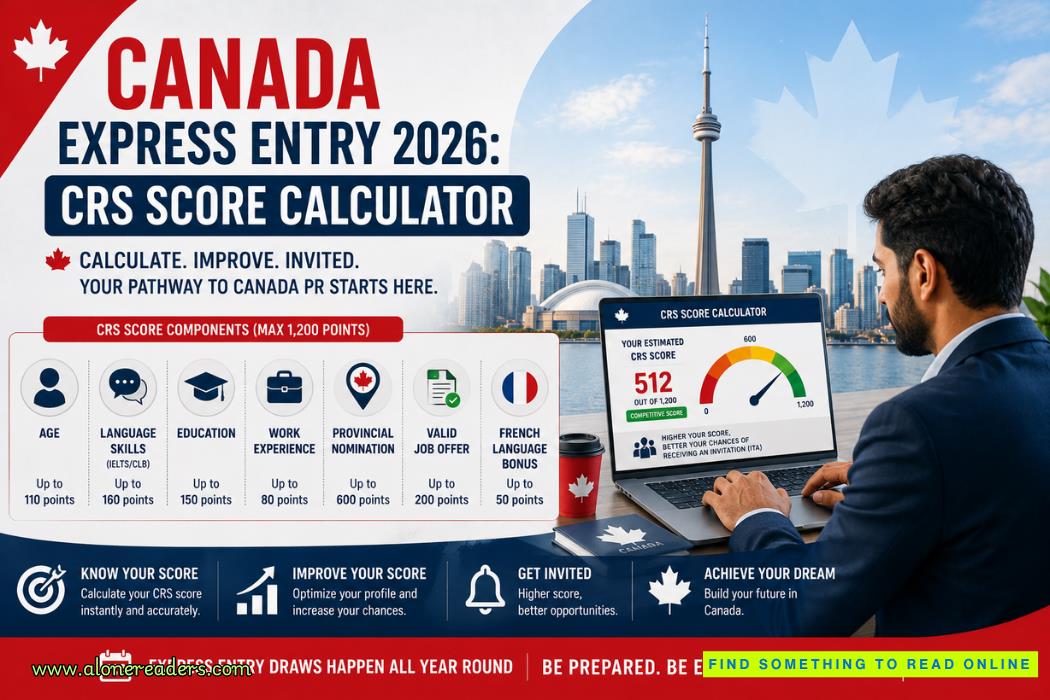
Why this matters now. Express Entry remains Canada’s fastest route to permanent residence for skilled workers, and 2026 brought category-focused updates that change how points translate into invitations. Understanding the Comprehensive Ranking System (CRS) in detail — including the exact point breakdown, recent policy adjustments, and practical ways to increase your score — is essential if you want to convert your profile into an Invitation to Apply (ITA).
What this article covers. You will find a precise CRS point-by-point breakdown for 2026, worked examples, how new category priorities affect scoring and draws, tactical short- and medium-term strategies to increase your CRS, and a checklist you can use immediately to estimate and improve your score.
Quick summary. The CRS awards up to 1,200 points across core human capital, spouse factors, skill-transferability, and additional points; 2026 updates emphasize Canadian work experience and occupation categories, so some levers are now more valuable than before.
How to use this post. Read the full scoring breakdown, then jump to the worked examples and the improvement playbook to create a targeted action plan tailored to your profile.
Short-term (weeks–months):
Medium-term (3–18 months):
Tactical notes: If you’re just below a competitive cut-off, prioritize low-cost, high-impact moves: language re-tests, ECA, and targeted PNPs.
Illustration example (how a small gain can convert your profile)
A candidate with 460 CRS who increases IELTS by one band across the four abilities might gain 10–20 core points and additional transferability points from improved combinations — a move from 460 to ~490 can change selection chances significantly, especially during a category draw that targets mid-range scores.
Final practical tip. Treat the CRS score as both a measurement and a roadmap: focus on the highest-return levers you can realistically achieve within the time you have, and be ready to update your Express Entry profile promptly when you secure new evidence.



 Qatar Temporary Work Visa 180 Days 2026: Complete Eligibility, Application Process, Documents, Costs, Extension Rules, and Employment Guide
 Canada Intra-Company Transfer Work Permit 2026: Complete Guide to Eligibility, Requirements, Application Process, and Employer Responsibilities
 UK Study English Language Visa 2026: Complete Guide to Eligibility, Requirements, Costs, Application Process, and Student Life
 UK Expansion Worker Visa Intra-Company 2026: Complete Guide to Eligibility, Sponsorship, Costs, Business Expansion, and Application Process
 High-End Talent Category A Work Permit China 2026: Complete Eligibility, Benefits, Application Process, and Expert Guide
 Cultural Activities Visa Japan 2026 Guide: Complete Eligibility, Requirements, Application Process, and Expert Tips










