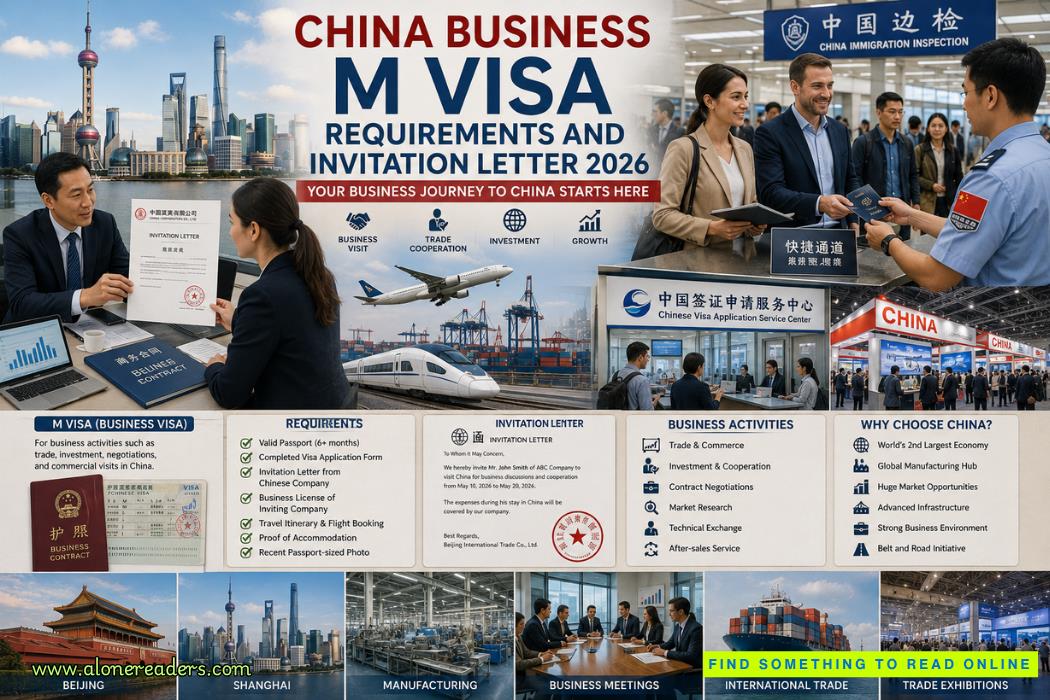
China remains one of the world’s largest commercial markets and manufacturing hubs, attracting foreign investors, importers, exporters, consultants, engineers, sourcing agents, and corporate executives from nearly every region of the world. As international trade activities continue to recover and expand in 2026, the China Business M Visa has become one of the most important entry pathways for foreign nationals visiting China for commercial and trade-related purposes.
The Chinese M Visa is specifically designed for individuals entering China for business and commercial activities. Unlike tourist or family visas, the M Visa focuses on professional engagements such as supplier negotiations, trade fairs, factory inspections, procurement meetings, investment discussions, technical consultations, contract negotiations, and participation in corporate events.
One of the most critical components of a successful M Visa application is the official invitation letter issued by a Chinese company or business partner. In many cases, visa approvals or refusals depend heavily on the accuracy, authenticity, and formatting of this invitation document.
In 2026, Chinese visa authorities continue to apply detailed scrutiny to business visa applications due to immigration compliance concerns, illegal employment risks, and document fraud prevention. Applicants must therefore prepare a highly organized application package with consistent supporting evidence.
The China Business M Visa is a short-term commercial visa issued to foreigners visiting China for business-related activities. The visa is generally intended for individuals who will not engage in direct employment or long-term salaried work inside China.
Typical activities permitted under the M Visa include:
The M Visa does not authorize long-term employment in China. Foreign nationals intending to work for a Chinese employer usually require a Z Visa and work permit instead.
Understanding the distinction between the M Visa and other Chinese visas is extremely important because incorrect visa selection can lead to rejection or immigration complications.
M Visa
Used for business and commercial activities.
Z Visa
Used for legal employment and long-term work in China.
L Visa
Used for tourism and personal travel.
F Visa
Usually issued for exchanges, visits, research, educational activities, or non-commercial interactions.
Q and S Visas
Used for family reunification and private visits.
Chinese immigration officers increasingly examine whether applicants are attempting to use an M Visa for unauthorized employment. Frequent long stays, repeated entries, or inconsistent business explanations may trigger additional scrutiny.
To qualify for a China M Visa in 2026, applicants generally must satisfy several core eligibility requirements.
Valid Passport
Applicants must possess a passport with:
Some Chinese embassies may require longer validity depending on the requested visa duration.
Business Purpose
The applicant must clearly demonstrate a genuine commercial or trade-related purpose for visiting China.
Examples include:
Invitation Letter from Chinese Entity
A formal invitation letter from a Chinese company, organization, or trade partner is usually mandatory.
Financial Stability
Applicants may need to demonstrate sufficient financial resources for:
Immigration Compliance History
Previous visa violations, overstays, deportations, or criminal records may negatively affect approval chances.
The exact requirements may vary slightly depending on the Chinese embassy or visa center handling the application. However, the following documents are commonly required in 2026.
Passport
Applicants must submit:
Visa Application Form
The China visa application form must be completed accurately and consistently.
Common errors include:
Even minor inconsistencies can result in processing delays.
Passport-Sized Photograph
The photograph must typically:
Invitation Letter
The invitation letter is one of the most important documents in the entire application.
Proof of Business Activities
Applicants may also submit:
Flight and Accommodation Information
Some visa centers request:
Proof of Legal Residence
Applicants applying outside their citizenship country may need:
The invitation letter serves as official confirmation that a Chinese company is expecting the foreign applicant for legitimate commercial purposes.
Chinese authorities use this document to evaluate:
Weak, vague, incomplete, or suspicious invitation letters are among the most common reasons for visa refusal.
In 2026, invitation letters should contain highly detailed and professionally structured information.
Applicant Information
The invitation letter should include:
Visit Information
The letter should clearly explain:
Inviting Company Information
The Chinese company should provide:
Relationship Explanation
The invitation should explain:
Financial Responsibility
Some invitation letters mention who will bear:
A professionally prepared invitation letter often follows this structure:
Company Header
Official company details and contact information.
Date
The issuance date of the invitation.
Embassy Address
Addressed to the Chinese embassy or visa center.
Invitation Content
Detailed explanation of:
Closing Statement
Formal confirmation requesting visa issuance.
Company Seal and Signature
Official stamp and representative signature.
Chinese embassies may reject unsigned or unstamped invitation letters.
China may issue several types of M Visas depending on business needs and applicant history.
Single Entry Visa
Allows one entry into China.
Usually valid for:
30 to 90 days stay
Double Entry Visa
Allows two entries before expiration.
Common for:
Multiple Entry Visa
Allows multiple entries over:
Frequent travelers with strong visa histories may qualify for longer validity periods.
Processing times vary by embassy and country.
Standard processing often takes:
4 to 7 business days
Express services may reduce processing to:
2 to 3 business days
However, additional security reviews or document verification may significantly increase waiting times.
Applicants should avoid booking non-refundable flights before visa approval.
Chinese embassies do not always provide detailed refusal explanations. However, common refusal factors include:
Weak Invitation Letter
Problems include:
Suspicious Travel History
Frequent unexplained visits or previous immigration issues may raise concerns.
Incomplete Documentation
Missing:
Suspected Unauthorized Employment
If officers believe the applicant intends to work illegally rather than conduct business activities, the visa may be denied.
False or Fraudulent Documents
Submitting fake invitation letters or altered documents may result in:
M Visa holders must comply with Chinese immigration laws during their stay.
Activities Allowed
Generally permitted:
Activities Not Allowed
Usually prohibited:
Chinese authorities have increased inspections involving foreigners working under incorrect visa categories.
In some situations, M Visas may be extended inside China.
Applicants usually need:
Extensions are not guaranteed and depend on local immigration bureau decisions.
Regional Differences in Visa Scrutiny
Chinese embassies in different countries may apply different levels of document scrutiny.
Applicants from countries with:
may experience:
Ensure Consistency Across Documents
All information should match precisely:
Use Professional Invitation Letters
Poorly drafted letters create unnecessary suspicion.
Demonstrate Genuine Commercial Purpose
Provide:
Avoid Overcomplicated Explanations
Simple, direct, professional explanations generally perform better during visa assessment.
Maintain Clean Immigration History
Frequent overstays or immigration violations in any country can affect approval outcomes.
The China Business M Visa remains an essential pathway for global trade professionals, investors, sourcing agents, consultants, and corporate representatives conducting commercial activities in China during 2026. However, Chinese immigration authorities now examine business visa applications with far greater precision than in previous years.
A successful application depends heavily on the quality of the supporting documentation, especially the official invitation letter. Every detail must align properly, from passport information and business purpose to travel schedules and company verification data.
Applicants who prepare professional, consistent, and transparent application packages significantly improve their chances of obtaining quick approval and avoiding unnecessary delays or refusals. As China continues strengthening its role in global manufacturing, technology, logistics, and international trade, the M Visa will remain one of the most strategically important business travel documents for professionals worldwide.



 Qatar Temporary Work Visa 180 Days 2026: Complete Eligibility, Application Process, Documents, Costs, Extension Rules, and Employment Guide
 Canada Intra-Company Transfer Work Permit 2026: Complete Guide to Eligibility, Requirements, Application Process, and Employer Responsibilities
 UK Study English Language Visa 2026: Complete Guide to Eligibility, Requirements, Costs, Application Process, and Student Life
 UK Expansion Worker Visa Intra-Company 2026: Complete Guide to Eligibility, Sponsorship, Costs, Business Expansion, and Application Process
 High-End Talent Category A Work Permit China 2026: Complete Eligibility, Benefits, Application Process, and Expert Guide
 Cultural Activities Visa Japan 2026 Guide: Complete Eligibility, Requirements, Application Process, and Expert Tips










