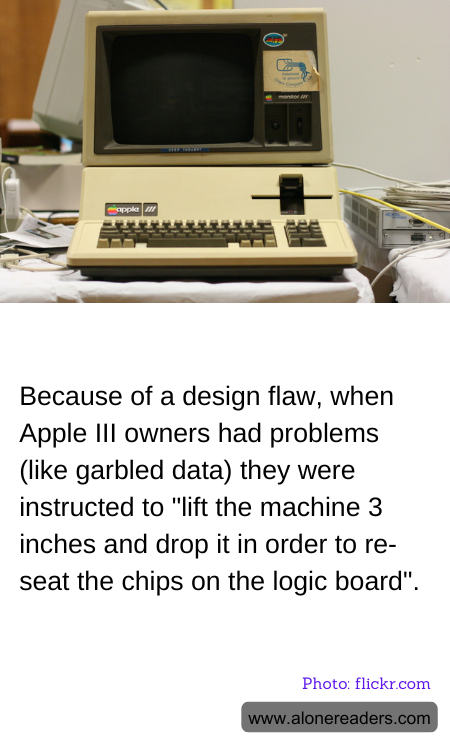
In the annals of technology history, the Apple III stands out not just for its ambition but also for its peculiar troubleshooting advice. Released in 1980, the Apple III was intended to be the successor to the highly successful Apple II, targeting business users with enhanced features and capabilities. However, it quickly became infamous for its design flaws, the most notable being the unconventional advice given to users experiencing technical issues: lift the machine three inches and drop it.
The Apple III was a significant leap forward in terms of design and functionality. It boasted a more powerful processor, increased memory, and a sophisticated operating system. However, these advancements were overshadowed by a series of hardware problems. One of the most persistent issues was garbled data, which often resulted from chips on the logic board becoming unseated. This was due to the absence of cooling fans in the design, as Apple aimed for a quieter and more aesthetically pleasing machine. Unfortunately, the heat generated by the components caused the chips to expand and contract, leading to poor connections.
Faced with numerous complaints from users, Apple's engineers devised a rather unorthodox solution. Instead of opening the machine and manually reseating the chips, users were instructed to lift the computer about three inches off their desk and let it drop. This jarring action was intended to jostle the chips back into place, temporarily resolving the issue. While this method might seem crude by today's standards, it was a testament to the ingenuity required to address the design oversight without requiring immediate hardware revisions.
The "drop fix" became a symbol of the Apple III's struggles and highlighted the challenges of balancing innovation with reliability. Despite its potential, the Apple III never achieved the commercial success Apple had hoped for, and it was eventually discontinued in 1984. The lessons learned from the Apple III's shortcomings, however, played a crucial role in shaping Apple's future products, emphasizing the importance of rigorous testing and user feedback in the development process.
For modern technology enthusiasts, the story of the Apple III serves as a fascinating glimpse into the early days of personal computing. It reminds us that even the most innovative companies can face setbacks and that sometimes, the simplest solutions can be the most effective, even if they involve a little bit of gravity.
