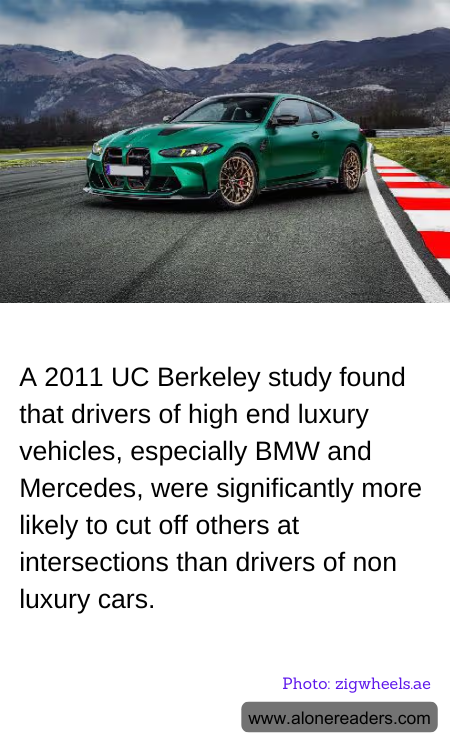
In 2011, a study conducted by researchers at the University of California, Berkeley, revealed intriguing insights into the behavior of drivers based on the type of vehicle they operated. The study found that drivers of high-end luxury vehicles, particularly those behind the wheels of BMWs and Mercedes, were significantly more likely to cut off other drivers at intersections compared to those driving non-luxury cars. This finding sparked discussions about the relationship between vehicle type and driver behavior, raising questions about the influence of status and wealth on road etiquette.
The study's methodology involved observing driver behavior at intersections and recording instances of aggressive driving, such as cutting off other vehicles. The researchers noted a clear pattern: drivers of luxury cars were more prone to disregard traffic rules and exhibit behaviors that could be considered inconsiderate or aggressive. This trend was particularly pronounced among drivers of BMWs and Mercedes, brands often associated with affluence and social status.
One possible explanation for this phenomenon is the psychological impact of driving a luxury vehicle. High-end cars are often seen as symbols of success and power, which may lead some drivers to feel a sense of entitlement on the road. This sense of superiority might manifest in a willingness to flout traffic rules or prioritize their own convenience over the safety and comfort of others. The study suggests that the perceived status associated with luxury cars could contribute to a mindset where aggressive driving is more acceptable.
Another factor to consider is the design and performance of luxury vehicles. These cars are typically equipped with powerful engines and advanced features that enhance the driving experience. The ability to accelerate quickly and maneuver with precision might embolden some drivers to take risks they might otherwise avoid in less capable vehicles. This could lead to behaviors such as cutting off other drivers, as the luxury car driver feels confident in their ability to navigate traffic swiftly and safely.
While the study highlights a notable trend, it is essential to acknowledge that not all drivers of luxury vehicles exhibit aggressive behavior. Many individuals who own high-end cars are conscientious and courteous drivers. However, the findings do suggest that there is a subset of luxury car drivers whose behavior on the road is influenced by the perceived status and capabilities of their vehicles.
Ultimately, the UC Berkeley study serves as a reminder of the complex interplay between vehicle type, driver psychology, and road behavior. It underscores the importance of promoting road safety and courtesy, regardless of the car one drives. Encouraging all drivers to adhere to traffic rules and consider the well-being of others can help create a safer and more harmonious driving environment for everyone.
