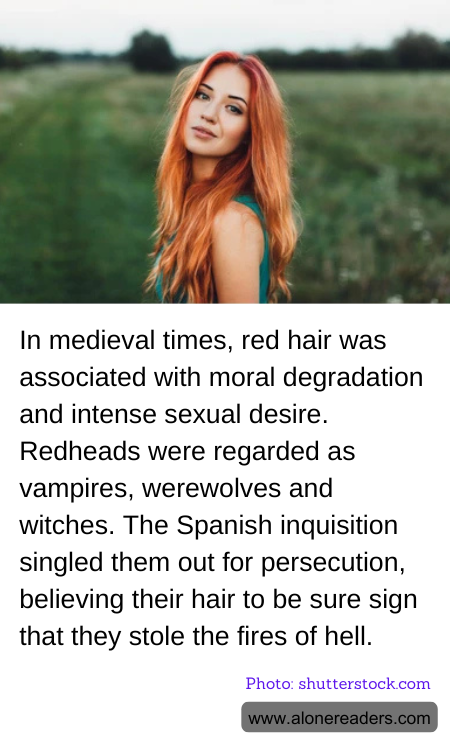
In medieval Europe, a time steeped in superstition and fear of the unknown, red hair was often viewed with suspicion and disdain. This vibrant hair color, which today is celebrated for its uniqueness, was once considered a mark of moral degradation and intense sexual desire. The striking appearance of redheads set them apart in societies that valued conformity, leading to a host of myths and misconceptions that painted them as figures of fear and intrigue.
The association of red hair with moral corruption and unbridled passion can be traced back to various cultural and religious beliefs. In a world where physical attributes were often linked to character traits, the fiery hue of red hair was thought to reflect a fiery temperament. This stereotype was further fueled by biblical interpretations and folklore, which often depicted redheads as deceitful or lascivious. Such perceptions were not just harmless stereotypes; they had real consequences for those with red hair, who were often marginalized and mistrusted.
The fear and suspicion surrounding redheads reached a peak during the Spanish Inquisition, a period marked by intense religious persecution. The Inquisition, driven by a desire to root out heresy and enforce religious orthodoxy, targeted various groups deemed to be threats to the faith. Among these were individuals with red hair, who were believed to have stolen the fires of hell. This belief was rooted in the idea that their hair color was a visible sign of their connection to the devil, making them prime targets for accusations of witchcraft and other forms of heresy.
Redheads were not only associated with witches but were also linked to other supernatural beings like vampires and werewolves. These creatures, often depicted as malevolent and dangerous, were thought to embody the same untamed and sinister qualities attributed to those with red hair. The fear of these mythical beings was pervasive, and redheads, by extension, were often viewed with suspicion and fear. This association with the supernatural only served to further isolate them from their communities, leading to discrimination and persecution.
Despite the challenges faced by redheads in medieval times, their story is one of resilience and survival. Over the centuries, the myths and misconceptions surrounding red hair have gradually faded, replaced by a recognition of its beauty and rarity. Today, redheads are celebrated for their unique appearance and the rich cultural history that accompanies their hair color. The journey from being feared and ostracized to being admired and embraced is a testament to the power of changing perceptions and the enduring human spirit.
