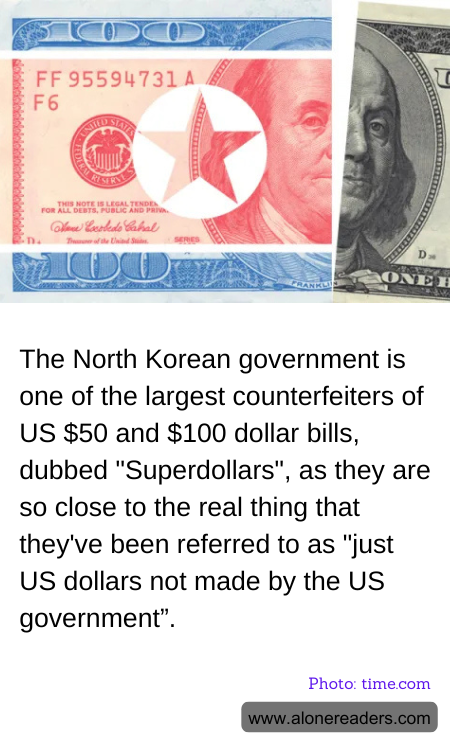
The shadowy world of international counterfeiting has long been a concern for governments and financial institutions worldwide. Among the most notorious players in this clandestine arena is the North Korean government, which has been implicated in the production of counterfeit US currency, specifically the $50 and $100 bills. These counterfeit notes, often referred to as "Superdollars," are so meticulously crafted that they have earned the unsettling reputation of being "just US dollars not made by the US government."
The term "Superdollars" reflects the extraordinary quality of these counterfeit bills. Unlike typical counterfeit currency, which can often be detected with relative ease, Superdollars are nearly indistinguishable from genuine US currency. They are produced using sophisticated printing techniques and high-quality materials that mimic the security features of legitimate notes. This includes the use of intaglio printing, which gives the bills their characteristic texture, and the incorporation of watermarks and security threads that are nearly identical to those found in authentic US currency.
The origins of North Korea's counterfeiting operations are shrouded in secrecy, but intelligence reports suggest that the country began producing Superdollars in the late 1980s. The motivation behind this illicit activity is believed to be multifaceted. Primarily, it serves as a means for the cash-strapped regime to generate hard currency, which is essential for funding its government operations and circumventing international sanctions. Additionally, the production of counterfeit currency is a strategic move to undermine the economic stability of the United States by injecting fake money into the global financial system.
The impact of Superdollars extends beyond the borders of North Korea. These counterfeit bills have been discovered in various countries, often surfacing in regions with high levels of cash transactions. The presence of Superdollars poses a significant challenge for law enforcement agencies and financial institutions, as they must constantly update their detection methods to keep pace with the evolving sophistication of counterfeiting techniques. The US Secret Service, which is tasked with safeguarding the integrity of the nation's currency, has been at the forefront of efforts to combat this threat, working closely with international partners to track and dismantle counterfeiting networks.
Despite these efforts, the allure of Superdollars remains a persistent issue. The high quality of these counterfeit notes means that they can circulate undetected for extended periods, causing financial losses and eroding trust in the currency. The situation underscores the need for continued vigilance and international cooperation to address the challenges posed by state-sponsored counterfeiting.
In conclusion, the production of Superdollars by the North Korean government represents a significant threat to the global financial system. The sophistication of these counterfeit bills highlights the lengths to which some regimes will go to achieve their economic and political objectives. As the world becomes increasingly interconnected, the fight against counterfeiting requires a coordinated and sustained effort to protect the integrity of national currencies and maintain the stability of the global economy.
