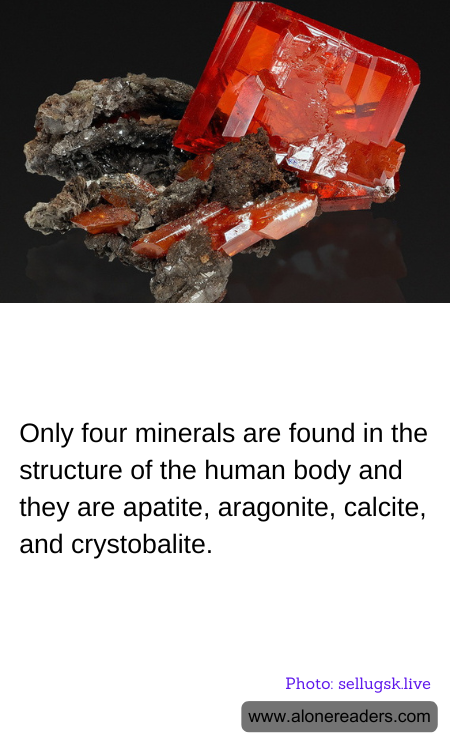
The human body is a marvel of natural engineering, composed of a complex array of elements and compounds that work in harmony to sustain life. Among these components, minerals play a crucial role in maintaining structural integrity and facilitating various physiological functions. Interestingly, only four minerals are predominantly found in the structure of the human body: apatite, aragonite, calcite, and cristobalite. Each of these minerals contributes uniquely to the body's architecture and functionality.
Apatite is perhaps the most well-known mineral in the human body, primarily because it forms the backbone of our skeletal system. This mineral is a group of phosphate minerals, with hydroxyapatite being the most prevalent form in bones and teeth. Hydroxyapatite provides the rigidity and strength necessary for bones to support the body and protect vital organs. It also plays a crucial role in dental health, as it forms the hard enamel that shields our teeth from decay. The presence of apatite in the body underscores the importance of calcium and phosphate in our diet, as these elements are essential for maintaining strong bones and teeth.
Aragonite, a form of calcium carbonate, is another mineral found in the human body, albeit in smaller quantities compared to apatite. It is primarily associated with the formation of certain types of kidney stones. While its presence in the human body is not as beneficial as apatite, understanding aragonite's role can help in the study of pathological conditions and the development of treatments for kidney stones. The study of minerals like aragonite in the body can provide insights into how mineral imbalances can lead to health issues, emphasizing the importance of maintaining a balanced diet and adequate hydration.
Calcite, another form of calcium carbonate, is found in the human body in trace amounts. It is more commonly associated with the formation of gallstones and certain types of kidney stones. While calcite is not a major component of the human body's structure, its presence in pathological formations highlights the delicate balance of minerals necessary for optimal health. The study of calcite and its role in the body can aid in understanding how mineral deposits form and how they can be prevented or treated.
Cristobalite, a form of silica, is the least common of the four minerals found in the human body. It is typically present in trace amounts and is not considered a structural component like apatite. However, its presence can be linked to certain occupational exposures and environmental factors. Understanding cristobalite's role in the body is important for assessing potential health risks associated with silica exposure and for developing strategies to mitigate these risks.
In conclusion, the presence of apatite, aragonite, calcite, and cristobalite in the human body highlights the intricate relationship between minerals and human health. While apatite is essential for structural integrity, the other minerals, though less prevalent, provide valuable insights into health conditions and the importance of maintaining mineral balance. By studying these minerals, scientists and healthcare professionals can better understand the complexities of the human body and develop strategies to promote health and prevent disease.
