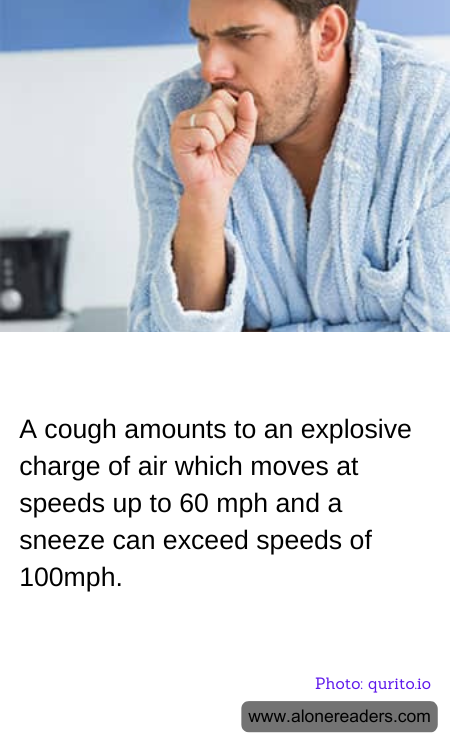
Coughing and sneezing are common bodily functions that most of us experience regularly, often without giving them much thought. However, these seemingly simple actions are actually powerful mechanisms that play a crucial role in maintaining our health. When we cough or sneeze, our bodies are engaging in a rapid expulsion of air that serves to clear irritants from our respiratory system. What many people might not realize is just how forceful these expulsions can be.
A cough is essentially an explosive charge of air that can travel at speeds up to 60 miles per hour. This rapid release is triggered when our respiratory system detects an irritant, such as dust, smoke, or mucus. The process begins with a deep inhalation, followed by the closure of the glottis, which is the opening between the vocal cords. The muscles in the chest and abdomen then contract, building up pressure in the lungs. When the glottis suddenly opens, the built-up air is expelled forcefully, carrying with it any unwanted particles. This mechanism is not only a reflexive response to irritation but also a protective measure to keep our airways clear and functioning properly.
Sneezing, on the other hand, is even more powerful. It can propel air and droplets at speeds exceeding 100 miles per hour. The process of sneezing is similar to coughing but often involves the nasal passages. When an irritant such as pollen or a viral particle enters the nose, it triggers a reflex that sends a signal to the brain. This signal initiates a coordinated response involving the muscles of the face, throat, and chest. The result is a sudden, forceful expulsion of air through the nose and mouth, effectively clearing the nasal passages of irritants.
Both coughing and sneezing are essential for maintaining respiratory health, but they also serve as reminders of how interconnected our bodily systems are. These actions demonstrate the body's ability to respond swiftly and effectively to potential threats, ensuring that our airways remain clear and functional. However, it's important to remember that while coughing and sneezing are natural and necessary, they can also be a means of spreading germs. Covering your mouth and nose with a tissue or your elbow when you cough or sneeze is a simple yet effective way to prevent the spread of infections.
Understanding the dynamics of coughing and sneezing not only highlights the remarkable capabilities of the human body but also underscores the importance of maintaining good hygiene practices. By being mindful of how we manage these powerful expulsions, we can protect ourselves and those around us, contributing to a healthier community.
