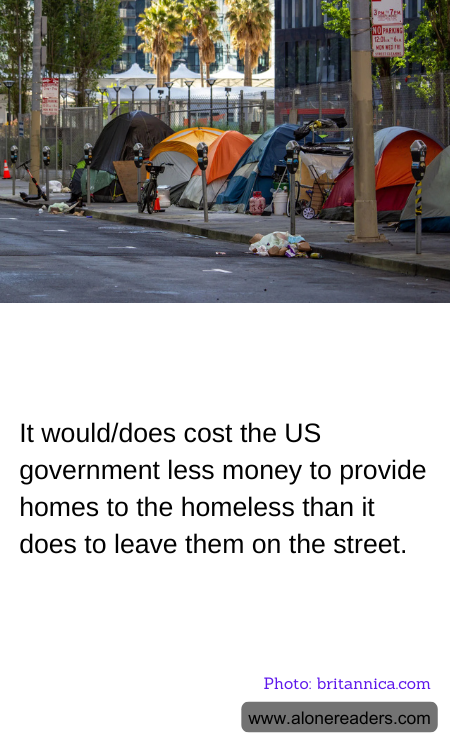
The issue of homelessness in the United States is a persistent and complex challenge that affects hundreds of thousands of individuals and families. While the moral imperative to provide shelter for those without homes is clear, there is also a compelling economic argument for doing so. Research and case studies have shown that it would actually cost the US government less to provide homes to the homeless than to leave them on the streets.
Homelessness incurs significant costs to society, primarily through emergency services, healthcare, and law enforcement. Individuals experiencing homelessness often rely on emergency rooms for healthcare, which is far more expensive than preventive or routine care. They are also more likely to interact with law enforcement and the criminal justice system, leading to additional costs. Studies have shown that the average cost of leaving a person homeless can be upwards of $30,000 to $50,000 per year due to these emergency services and interactions.
In contrast, providing stable housing for the homeless can significantly reduce these costs. The "Housing First" approach, which prioritizes providing permanent housing to homeless individuals without preconditions, has been implemented in various cities with promising results. For instance, a study in Utah found that the state reduced its chronic homeless population by 91% and saved an average of $8,000 per person annually by providing housing and supportive services. Similarly, a program in Denver reported saving $15,773 per person per year by housing the homeless, primarily through reduced healthcare and legal expenses.
The economic benefits of housing the homeless extend beyond immediate cost savings. Stable housing can lead to improved health outcomes, increased employment opportunities, and better integration into society. When individuals have a secure place to live, they are more likely to find and maintain employment, contribute to the economy, and require fewer public resources in the long term.
Moreover, investing in housing solutions can stimulate local economies. Construction and maintenance of housing create jobs and generate economic activity. Additionally, when formerly homeless individuals have stable housing, they are more likely to spend money in their communities, further boosting local economies.
While the initial investment in housing may seem substantial, the long-term savings and societal benefits make it a financially sound strategy. By reallocating funds from emergency services to housing initiatives, the government can not only save money but also improve the quality of life for thousands of individuals.
In conclusion, providing homes to the homeless is not only a compassionate choice but also an economically prudent one. By addressing the root causes of homelessness and investing in permanent housing solutions, the US government can reduce overall costs, improve public health, and foster stronger, more resilient communities. The evidence is clear: housing the homeless is a win-win solution for both individuals and society as a whole.
