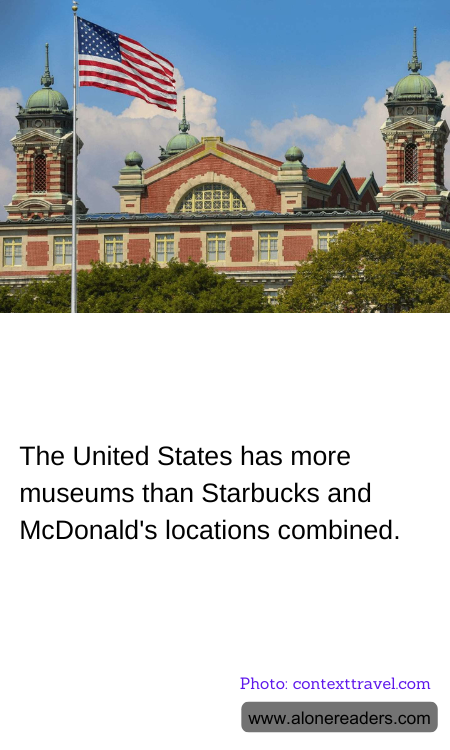
In a world where fast food chains and coffee shops seem to dominate every street corner, it might come as a surprise to learn that the United States is home to more museums than the combined number of Starbucks and McDonald's locations. This fascinating fact underscores the country's rich cultural landscape and its commitment to preserving and showcasing history, art, science, and more.
Museums in the United States serve as vital cultural institutions that offer educational experiences, preserve heritage, and inspire creativity. With over 35,000 museums scattered across the nation, they outnumber the approximately 15,000 McDonald's and 15,000 Starbucks locations combined. These museums range from world-renowned institutions like the Smithsonian in Washington, D.C., and the Metropolitan Museum of Art in New York City, to smaller, community-focused museums that highlight local history and culture.
The diversity of museums in the U.S. is as vast as the country itself. From art and history to science and technology, museums cater to a wide array of interests and age groups. For instance, the American Museum of Natural History in New York offers a glimpse into the wonders of the natural world, while the National Air and Space Museum in Washington, D.C., takes visitors on a journey through the history of aviation and space exploration. Meanwhile, children's museums provide interactive and engaging environments for young minds to explore and learn.
The prevalence of museums across the United States reflects a deep-seated appreciation for learning and cultural enrichment. Unlike the transient satisfaction of a quick meal or a cup of coffee, museums offer lasting experiences that can shape perspectives and ignite passions. They serve as communal spaces where people of all ages can come together to explore new ideas, understand different cultures, and reflect on the past.
Moreover, museums play a crucial role in supporting local economies and tourism. They attract millions of visitors each year, contributing significantly to the hospitality and service industries. Many museums also offer educational programs and workshops, further enhancing their value to communities and schools.
In an era where digital media and technology often dominate leisure activities, the enduring appeal of museums is a testament to their importance in society. They provide a tangible connection to history and culture, offering experiences that are both informative and transformative. As the United States continues to evolve, its museums remain steadfast in their mission to educate, inspire, and connect people from all walks of life.
In conclusion, the fact that the United States has more museums than Starbucks and McDonald's locations combined is a powerful reminder of the nation's dedication to cultural preservation and education. These institutions not only enrich the lives of individuals but also strengthen communities and foster a deeper understanding of the world around us. Whether you're a history buff, an art enthusiast, or simply curious about the world, there's a museum waiting to welcome you with open doors and endless stories.
