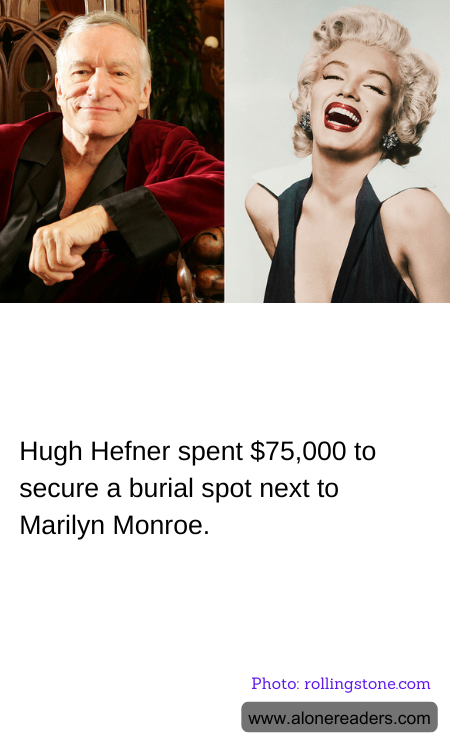
In the world of celebrity culture, few figures have been as iconic as Hugh Hefner and Marilyn Monroe. Both left indelible marks on the entertainment industry, and their legacies continue to captivate audiences worldwide. In a move that underscores the intertwined nature of their public personas, Hugh Hefner, the founder of Playboy magazine, made headlines when he purchased a burial spot next to Marilyn Monroe for $75,000.
Marilyn Monroe, the quintessential symbol of Hollywood glamour, was the first cover girl of Playboy magazine in December 1953. Her image graced the inaugural issue, setting the tone for the publication's blend of sophistication and sensuality. Monroe's association with Playboy was not just a pivotal moment for the magazine but also a defining moment in her career, cementing her status as a cultural icon. Hefner's decision to secure a final resting place beside Monroe can be seen as a tribute to the woman who helped launch his magazine into the stratosphere of success.
The burial spot, located in the Westwood Village Memorial Park Cemetery in Los Angeles, is a testament to Hefner's admiration for Monroe. This cemetery is the resting place of many Hollywood legends, but the proximity to Monroe adds a layer of intrigue and nostalgia. Hefner's purchase of the plot in 1992 was a strategic move, ensuring that his legacy would be forever linked with Monroe's. It was a decision that reflected both his business acumen and his personal reverence for the actress.
While some may view Hefner's choice as an extravagant gesture, it also speaks to the deep connection he felt with Monroe. In interviews, Hefner often expressed his admiration for her, describing her as a woman who embodied the spirit of the era. By choosing to be laid to rest next to her, Hefner ensured that their stories would continue to be told together, a fitting conclusion to a relationship that began with the launch of Playboy.
Hefner's decision to spend $75,000 on the burial spot is a reminder of the enduring power of celebrity and the ways in which public figures can shape and influence each other's legacies. It highlights the unique bond between two of the 20th century's most recognizable figures, whose lives and careers were marked by both triumph and tragedy. As visitors pay their respects at the cemetery, they are reminded of the lasting impact these icons have had on popular culture.
In the end, Hugh Hefner's choice to be buried next to Marilyn Monroe is more than just a final resting place; it is a symbol of a shared history, a nod to the past, and a testament to the enduring allure of two of Hollywood's most legendary figures.
