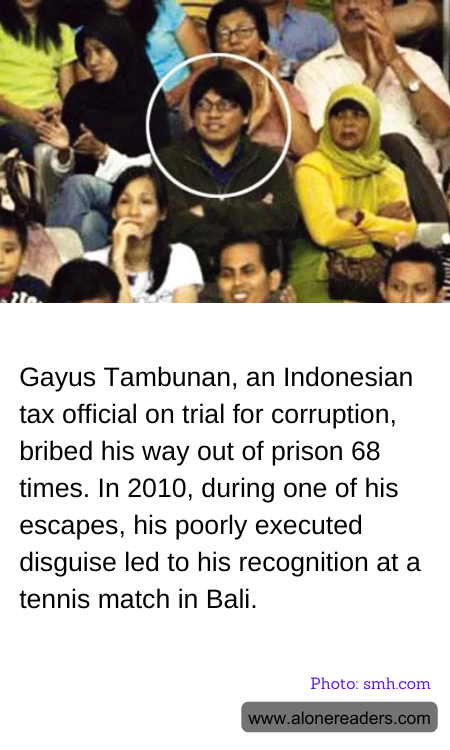
In a tale that reads more like a plot from a crime thriller than a real-life event, Gayus Tambunan, an Indonesian tax official, became infamous for his audacious acts of corruption and deception. In 2010, Tambunan was on trial for embezzling millions of dollars in tax funds, a scandal that rocked Indonesia and highlighted the pervasive corruption within its bureaucratic systems. However, what truly captured the public's imagination was not just the scale of his financial crimes, but his brazen ability to bribe his way out of prison a staggering 68 times.
Tambunan's escapades were emblematic of the systemic issues within the Indonesian penal system, where money and influence often trump justice. His repeated absences from prison were facilitated by corrupt officials who turned a blind eye in exchange for hefty bribes. This flagrant abuse of power and privilege not only undermined the integrity of the legal system but also eroded public trust in governmental institutions.
The most notorious of Tambunan's escapades occurred when he was spotted at a tennis match in Bali, a far cry from the confines of his prison cell. Attempting to blend in with the crowd, Tambunan donned a poorly executed disguise, complete with a wig and glasses. However, his efforts were in vain as he was quickly recognized by a journalist, leading to a media frenzy. The incident became a symbol of the audacity and impunity with which some individuals could flout the law, and it sparked widespread outrage across the nation.
This episode not only embarrassed the Indonesian government but also prompted a closer examination of the country's judicial and correctional systems. It raised critical questions about the effectiveness of anti-corruption measures and the need for reform to prevent similar incidents in the future. The public demanded accountability, not just from Tambunan, but from the officials who enabled his repeated escapes.
In the aftermath, the Indonesian government faced immense pressure to address these systemic issues. Efforts were made to tighten security within prisons and to implement stricter oversight of officials. Tambunan's case served as a catalyst for broader discussions about corruption and the need for transparency and accountability in public service.
Gayus Tambunan's story is a cautionary tale about the dangers of unchecked power and the corrosive effects of corruption. It underscores the importance of vigilance and reform in ensuring that justice is served and that no individual, regardless of their position or wealth, is above the law. As Indonesia continues to grapple with these challenges, the lessons from Tambunan's escapades remain as relevant as ever, serving as a reminder of the ongoing battle against corruption and the pursuit of a fair and just society.
