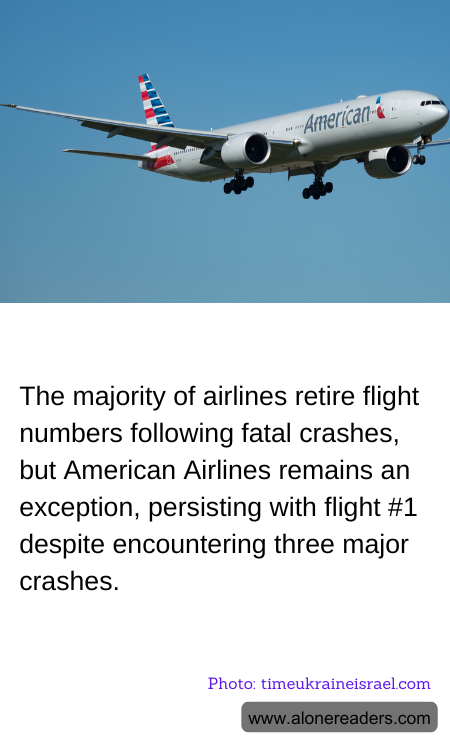
In the aviation industry, flight numbers hold significant symbolic and operational importance. They are not just identifiers but also carry a legacy, often associated with the airline's history and reputation. When a flight number becomes linked with a tragic event, such as a fatal crash, many airlines choose to retire it out of respect for the victims and to distance themselves from the negative connotations. However, American Airlines stands out as an exception to this practice, particularly with its continued use of flight number 1, despite its association with three major crashes.
The tradition of retiring flight numbers is rooted in sensitivity and public relations. When a flight number is involved in a disaster, it becomes etched in public memory, often evoking feelings of fear and sorrow. By retiring the number, airlines aim to honor the victims and provide a sense of closure to the families affected. It also helps in rebuilding trust with passengers who might feel uneasy about boarding a flight with a notorious number. This practice is widespread, with many airlines opting to replace such numbers with new ones to avoid any negative associations.
American Airlines, however, has taken a different approach with flight number 1. This flight number is one of the airline's most prestigious, typically used for its flagship route between New York and Los Angeles. Despite its unfortunate history, American Airlines has chosen to retain this number, a decision that may seem perplexing to some. The airline's rationale could be tied to the significance of the route and the number itself, which represents a sense of continuity and resilience. By maintaining flight number 1, American Airlines might be signaling its commitment to moving forward while acknowledging its past.
The decision not to retire flight number 1 could also reflect a broader strategy of focusing on safety improvements and transparency rather than symbolic gestures. American Airlines has invested heavily in enhancing its safety protocols and technology, aiming to reassure passengers through action rather than changes in flight numbering. This approach suggests that the airline prioritizes tangible improvements over symbolic changes, believing that passengers will ultimately value safety and reliability above all else.
While American Airlines' stance on flight number 1 is unique, it highlights the complex interplay between tradition, symbolism, and business strategy in the aviation industry. The decision to retain or retire a flight number is not merely a matter of policy but also involves considerations of brand identity, customer perception, and operational continuity. As airlines navigate these challenges, they must balance respect for the past with a forward-looking vision that prioritizes safety and passenger confidence.
In conclusion, American Airlines' persistence with flight number 1, despite its history, underscores a distinctive approach to handling the legacy of aviation incidents. It reflects a broader narrative of resilience and commitment to safety, suggesting that the airline values continuity and improvement over symbolic gestures. This decision, while controversial to some, is a testament to the complex dynamics that airlines must manage in maintaining their reputation and ensuring passenger trust.
