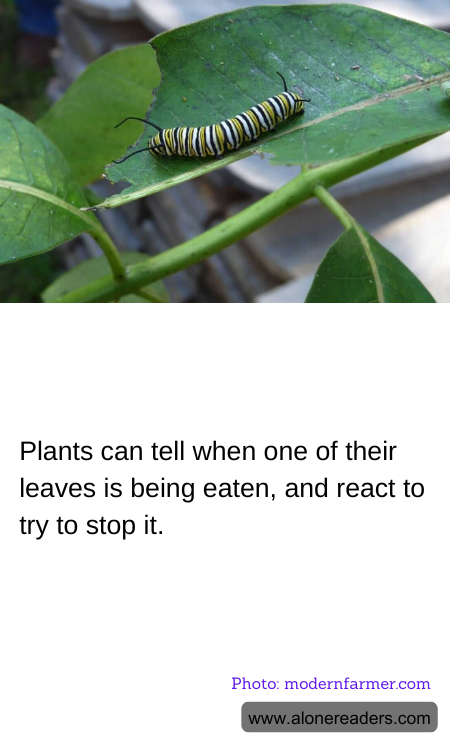
In the intricate world of nature, plants have long been perceived as passive entities, silently enduring the whims of their environment. However, recent scientific discoveries have unveiled a fascinating aspect of plant life that challenges this perception: plants can sense when one of their leaves is being eaten and can react to this threat in remarkable ways.
Plants, though devoid of a nervous system, have evolved sophisticated mechanisms to detect and respond to herbivory. When a leaf is damaged by an insect or other herbivore, the plant initiates a complex chain of biochemical reactions. This process begins with the release of chemical signals, often in the form of volatile organic compounds, which serve as distress signals to the rest of the plant. These signals can trigger defensive responses not only in the affected leaf but throughout the entire plant.
One of the primary responses is the production of defensive chemicals. These compounds can deter herbivores by making the leaves less palatable or even toxic. For instance, some plants increase the production of tannins, which can interfere with the digestion of proteins in the herbivore's gut. Others might produce alkaloids or other secondary metabolites that can have a direct toxic effect on the herbivores. This chemical warfare is a testament to the plant's ability to actively defend itself against threats.
Moreover, plants can also engage in a form of communication with their neighbors. The volatile compounds released by a damaged plant can be detected by nearby plants, prompting them to preemptively bolster their own defenses. This inter-plant communication suggests a level of community awareness and cooperation that is both surprising and impressive. It highlights the interconnectedness of plant ecosystems and their ability to adapt collectively to environmental pressures.
In addition to chemical defenses, some plants employ physical deterrents. For example, they might increase the production of thorns or toughen their leaves to make them less appealing to herbivores. These physical changes can occur relatively quickly, demonstrating the plant's ability to adapt its structure in response to immediate threats.
The ability of plants to detect and respond to being eaten is a remarkable example of nature's ingenuity. It challenges the traditional view of plants as passive organisms and underscores their dynamic role in ecosystems. This newfound understanding of plant behavior not only enriches our appreciation of the natural world but also has practical implications. By studying these plant defense mechanisms, scientists can develop more sustainable agricultural practices, reducing the need for chemical pesticides and enhancing crop resilience.
In conclusion, the revelation that plants can sense and react to being eaten opens up a new realm of understanding in plant biology. It invites us to reconsider our relationship with the plant kingdom and to marvel at the complex and adaptive strategies that plants employ to survive and thrive in a world full of challenges. As we continue to explore these hidden capabilities, we gain valuable insights into the resilience and resourcefulness of life on Earth.
