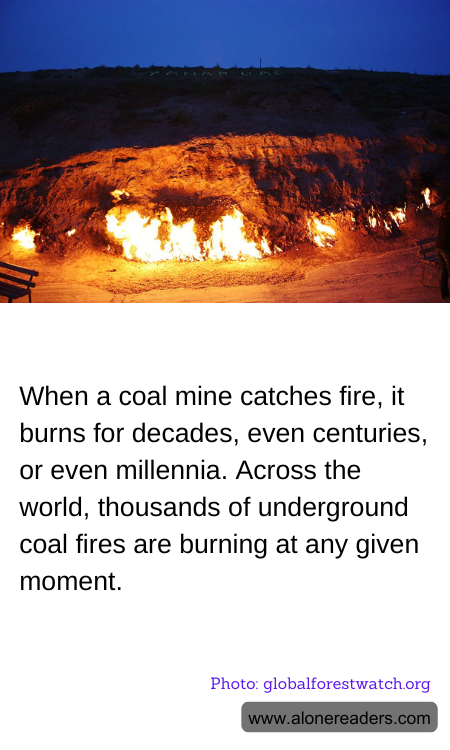
Beneath the surface of the Earth, a hidden and persistent danger smolders: underground coal fires. These fires, once ignited, can burn for decades, centuries, or even millennia, posing significant environmental, economic, and health challenges. Across the globe, thousands of these fires are burning at any given moment, often unnoticed by the public but leaving a lasting impact on the planet.
Coal fires can start through natural causes such as lightning strikes or spontaneous combustion, where heat generated by the oxidation of coal reaches a point where it ignites. Human activities, such as mining operations, can also trigger these fires. Once a coal seam catches fire, it is incredibly difficult to extinguish due to the vast network of tunnels and the sheer volume of combustible material. The fire can spread through the underground seams, fueled by the oxygen that seeps in through cracks and fissures.
The consequences of these fires are far-reaching. Environmentally, they release significant amounts of greenhouse gases, such as carbon dioxide and methane, contributing to climate change. Toxic gases and particulate matter released into the air can cause severe air pollution, affecting the health of nearby communities. The land above burning coal seams can become unstable, leading to ground subsidence and the destruction of infrastructure. In some cases, entire towns have been abandoned due to the dangers posed by underground coal fires.
Economically, coal fires can devastate local economies that rely on mining. The loss of coal reserves and the costs associated with firefighting efforts can be substantial. In some regions, the fires have been burning for so long that they have become a part of the local landscape, with little hope of extinguishment. For example, the Centralia mine fire in Pennsylvania has been burning since 1962 and is expected to continue for centuries.
Efforts to combat underground coal fires are ongoing, but they are often complex and costly. Techniques such as sealing off oxygen sources, flooding the mines, or using inert gases to suffocate the fire have been employed with varying degrees of success. However, the scale and inaccessibility of many fires make them difficult to control. International collaboration and research are crucial in developing more effective methods to address this persistent problem.
Raising awareness about underground coal fires is essential to mitigate their impact. By understanding the causes and consequences of these fires, communities and policymakers can work together to prevent new fires from starting and manage existing ones more effectively. As the world continues to seek cleaner and more sustainable energy sources, addressing the issue of underground coal fires remains a critical component of global environmental stewardship.
