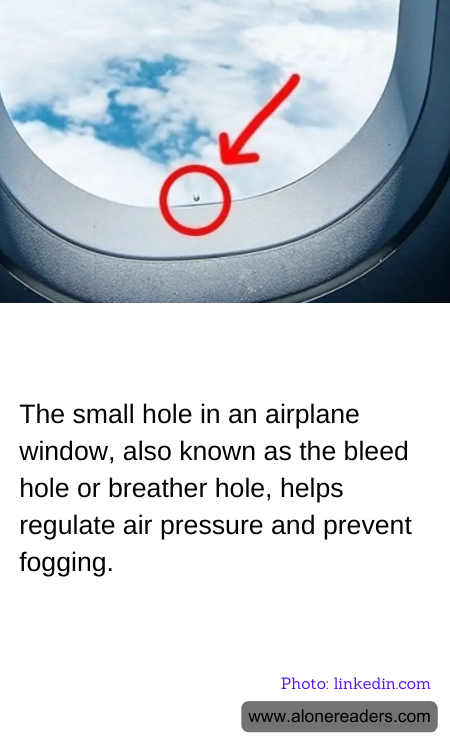
When you gaze out of an airplane window, you might notice a tiny hole at the bottom of the middle pane. This small but significant feature is known as the bleed hole or breather hole. While it might seem inconsequential, this little hole plays a crucial role in ensuring passenger safety and comfort during a flight.
Airplane windows are typically made up of three layers: the outer pane, the middle pane, and the inner pane. The outer pane is designed to withstand the pressure difference between the cabin and the outside atmosphere. The middle pane, which contains the bleed hole, acts as a backup in case the outer pane fails. The inner pane is primarily for passenger safety and comfort, protecting against scratches and providing an additional barrier.
The primary function of the bleed hole is to help regulate the air pressure between the cabin and the space between the inner and middle panes. As an aircraft ascends, the air pressure outside decreases significantly compared to the pressure inside the cabin, which is maintained at a comfortable level for passengers. The bleed hole allows the pressure between the middle and inner panes to equalize with the cabin pressure, ensuring that the outer pane bears the brunt of the pressure difference. This design minimizes stress on the middle pane, enhancing the overall structural integrity of the window.
In addition to pressure regulation, the bleed hole serves another important purpose: preventing fogging. During a flight, temperature differences between the cabin and the outside environment can cause moisture to condense on the window panes. The bleed hole allows moisture to escape from the space between the panes, reducing the likelihood of fogging and ensuring passengers have a clear view of the sky and landscape below.
While the bleed hole might seem like a minor detail, it is a testament to the meticulous engineering that goes into designing aircraft. By maintaining pressure balance and preventing fogging, this small feature contributes significantly to passenger safety and comfort. Next time you find yourself peering out of an airplane window, take a moment to appreciate the clever design and engineering that make air travel not only possible but also enjoyable.
