George Washington, the first President of the United States, is often remembered for his leadership and his pivotal role in the founding of the nation. However, one of the most enduring myths about him is that he had wooden teeth. This misconception has been widely circulated, but historical evidence reveals a more complex and intriguing story about his dental health.
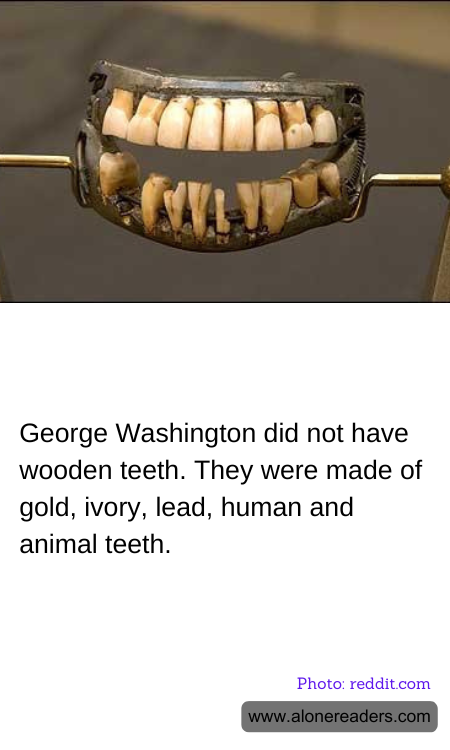
Washington's dental troubles began at a young age, and by the time he became president, he had lost most of his teeth. Contrary to the popular myth, none of his dentures were made of wood. Instead, they were crafted from a variety of materials, including gold, ivory, lead, and a combination of human and animal teeth. These materials were chosen for their durability and the ability to be shaped into a functional set of dentures.
The use of human and animal teeth in dentures was not uncommon in the 18th century. Human teeth were often sourced from the living or the deceased, sometimes even purchased from impoverished individuals who sold their teeth for money. Animal teeth, such as those from cows or horses, were also used due to their size and strength. These materials were mounted on a base made of lead or ivory, with gold springs and wires to hold them together and allow for some movement.
Washington's dentures were crafted by skilled dentists of the time, including John Greenwood, who was known for his innovative techniques. Despite their craftsmanship, these dentures were far from comfortable. They often caused Washington pain and discomfort, affecting his speech and appearance. Portraits of Washington, such as the famous one by Gilbert Stuart, were often painted with his mouth closed to hide the ill-fitting dentures.
The myth of Washington's wooden teeth likely arose from the appearance of his dentures. Over time, the ivory bases could become stained and discolored, giving them a wooden look. This visual similarity, combined with the lack of detailed historical records available to the general public, may have contributed to the perpetuation of the myth.
Understanding the truth about George Washington's dentures provides a fascinating glimpse into the challenges of dental care in the 18th century. It also highlights the resilience and determination of a man who, despite his personal discomfort, led a nation through its formative years. By dispelling the myth of wooden teeth, we gain a more accurate and humanizing portrait of Washington, reminding us that even the most revered figures in history faced everyday struggles.
