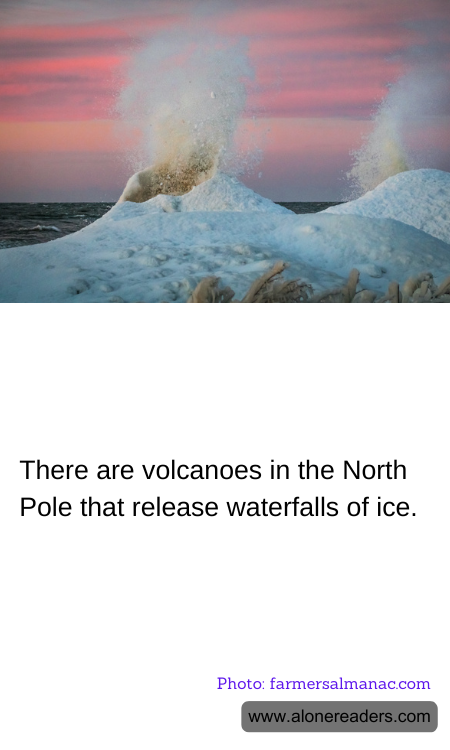
The idea of volcanoes conjures images of fiery eruptions and molten lava cascading down mountainsides. However, in the frigid expanses of the North Pole, a different kind of volcanic activity exists—one that releases not streams of lava, but waterfalls of ice. These unique geological formations, known as cryovolcanoes, are a fascinating phenomenon that challenges our traditional understanding of volcanic activity.
Cryovolcanoes, or ice volcanoes, are found in some of the coldest regions of our solar system, including the icy moons of Jupiter and Saturn. However, their presence on Earth, particularly in the Arctic regions, is a testament to the planet's diverse and dynamic geological processes. Unlike traditional volcanoes, cryovolcanoes erupt with a slurry of water, ice, and other volatile compounds, such as ammonia or methane. When these materials are expelled from the volcano, they quickly freeze, creating stunning ice formations that resemble frozen waterfalls.
The existence of these icy volcanoes in the North Pole is largely due to the unique environmental conditions of the region. The Arctic is characterized by its extreme cold and the presence of permafrost, a layer of permanently frozen ground. Beneath this icy crust, geothermal heat from the Earth's interior can cause pockets of water and other substances to remain in a liquid state. When pressure builds up, these materials are forced to the surface, where they freeze almost instantly in the sub-zero temperatures, forming the spectacular ice cascades.
These ice waterfalls are not only a visual marvel but also a subject of scientific intrigue. They offer valuable insights into the geological and climatic processes of the Arctic. Studying cryovolcanoes can help scientists understand the interactions between the Earth's interior and its surface, as well as the potential for similar processes on other icy bodies in the solar system. Furthermore, these formations may provide clues about the history of water on Earth and the potential for life in extreme environments.
For visitors to the Arctic, witnessing a cryovolcano in action is a rare and awe-inspiring experience. The sight of ice erupting from the ground and cascading down in frozen sheets is a reminder of the Earth's incredible natural diversity and the many mysteries it still holds. As climate change continues to impact the polar regions, understanding and preserving these unique geological features becomes increasingly important.
In conclusion, the presence of ice-releasing volcanoes in the North Pole is a remarkable natural phenomenon that highlights the complexity and wonder of our planet. These cryovolcanoes not only captivate the imagination but also serve as a crucial area of study for scientists seeking to unravel the secrets of Earth's past and the potential for life beyond our planet. As we continue to explore and learn from these icy giants, they remind us of the delicate balance of nature and the need to protect our planet's most extraordinary landscapes.
