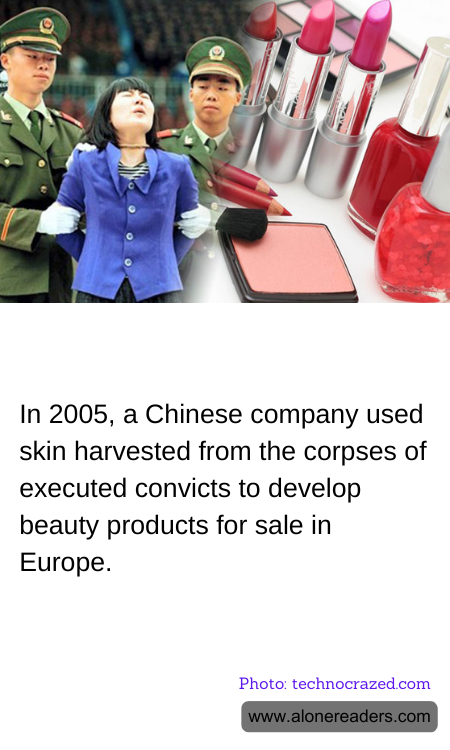
In 2005, a disturbing revelation surfaced that a Chinese company was allegedly using skin harvested from the corpses of executed convicts to develop beauty products intended for sale in Europe. This unsettling practice raised significant ethical and moral concerns, sparking a global debate about the lengths to which some companies might go in pursuit of profit.
The controversy began when reports emerged suggesting that the company was sourcing skin from executed prisoners without the consent of the deceased or their families. This practice not only violated basic human rights but also highlighted the lack of transparency and ethical oversight in certain sectors of the beauty industry. The use of human-derived materials in cosmetic products is a sensitive issue, and the notion of using skin from executed individuals added a macabre dimension to the debate.
The ethical implications of such practices are profound. The idea of using human remains for commercial gain challenges fundamental principles of respect for the deceased and their families. It also raises questions about the regulation of the beauty industry and the need for stringent ethical guidelines to prevent such practices from occurring. The lack of informed consent and the potential exploitation of vulnerable individuals further complicate the moral landscape surrounding this issue.
In response to the reports, there was widespread condemnation from human rights organizations and consumer advocacy groups. They called for greater transparency and accountability in the sourcing of materials used in beauty products. The incident underscored the importance of ethical sourcing and the need for companies to adhere to international standards that respect human dignity and rights.
This case also highlighted the broader issue of the global beauty industry's reliance on controversial ingredients and practices. It served as a wake-up call for consumers to be more vigilant about the products they purchase and the ethical standards of the companies they support. The incident prompted calls for stricter regulations and oversight to ensure that beauty products are developed in a manner that respects human rights and ethical considerations.
In the years since this controversy, there has been a growing movement towards ethical and sustainable beauty practices. Consumers are increasingly demanding transparency and accountability from companies, pushing for products that are not only effective but also ethically sourced and produced. This shift reflects a broader trend towards conscious consumerism, where individuals are more aware of the impact of their purchasing decisions on society and the environment.
The 2005 incident serves as a stark reminder of the potential for ethical lapses in industries driven by profit. It underscores the need for ongoing vigilance and advocacy to ensure that human rights and ethical standards are upheld in all aspects of production and commerce. As the beauty industry continues to evolve, it is crucial that companies prioritize ethical practices and transparency to build trust with consumers and contribute to a more just and humane world.
