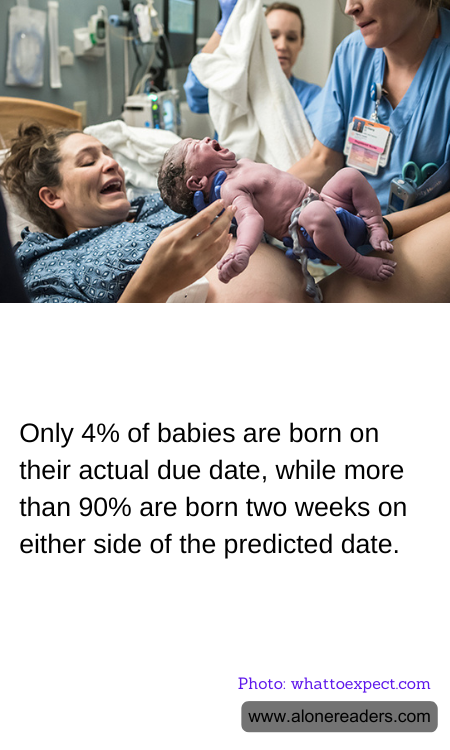
The anticipation surrounding the arrival of a new baby is often marked by the significant milestone of a due date. However, the reality of childbirth timing is far more flexible than this singular date might suggest. In fact, only about 4% of babies are born on their actual due date, a statistic that might surprise many expectant parents. This discrepancy highlights the complexity and unpredictability of human gestation, which can be influenced by a myriad of factors.
The concept of a due date is primarily a guideline, calculated based on the first day of the mother's last menstrual period and assuming a 28-day cycle. This method, while widely used, is inherently imprecise because it does not account for variations in individual menstrual cycles or the exact timing of ovulation and conception. As a result, the due date serves more as an estimate rather than a precise prediction.
The majority of babies, over 90%, are born within a two-week window on either side of the predicted due date. This period, often referred to as the "due month," reflects the natural variability in pregnancy lengths. Factors such as genetics, maternal health, and even environmental influences can affect when labor begins. For instance, first-time mothers may experience longer pregnancies, while subsequent pregnancies might result in earlier deliveries.
Understanding this variability can help alleviate some of the anxiety and pressure that expectant parents may feel as the due date approaches. It is important for parents to prepare for the possibility of an early or late arrival and to focus on the health and readiness of both the mother and baby rather than fixating on a specific date. Healthcare providers often emphasize the importance of regular prenatal check-ups to monitor the baby's development and the mother's health, ensuring that both are ready for delivery when the time comes.
The unpredictability of childbirth is a reminder of the natural processes that govern human life. While modern medicine has made significant advancements in monitoring and managing pregnancies, the exact timing of birth remains one of the few aspects that is still largely dictated by nature. This unpredictability is not only normal but also a testament to the uniqueness of each pregnancy.
In conclusion, while the due date is an important milestone in the journey of pregnancy, it is essential to view it as a flexible guideline rather than a fixed deadline. By understanding the natural variability in childbirth timing, expectant parents can better prepare for the arrival of their baby, focusing on health and well-being rather than the calendar. This perspective can help create a more relaxed and positive experience as families await the joyous occasion of welcoming a new life into the world.
