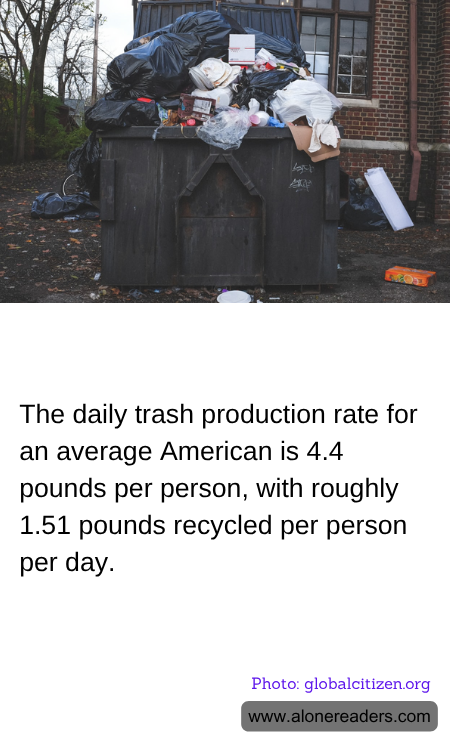
Every day, the average American generates approximately 4.4 pounds of trash. This figure might seem staggering, but it reflects the reality of modern consumption and waste patterns. From packaging materials to food scraps, the waste we produce is a byproduct of our daily lives, shaped by convenience and consumer habits. While this number highlights the magnitude of waste production, it also underscores the importance of effective waste management and recycling efforts.
Recycling plays a crucial role in mitigating the impact of waste on the environment. On average, each American recycles about 1.51 pounds of their daily waste. This effort helps reduce the amount of trash that ends up in landfills, conserves natural resources, and decreases pollution. Recycling not only saves energy but also supports the economy by creating jobs in the recycling and manufacturing industries. However, despite these benefits, there is still a significant gap between the total waste produced and the amount recycled.
The challenge lies in increasing recycling rates and reducing overall waste production. Education and awareness are key components in this endeavor. By understanding the impact of waste on the environment and the benefits of recycling, individuals can make more informed choices. Simple actions, such as reducing single-use plastics, composting organic waste, and supporting products made from recycled materials, can collectively make a significant difference.
Communities and local governments also play a vital role in promoting sustainable waste management practices. Implementing comprehensive recycling programs, providing accessible recycling facilities, and encouraging waste reduction initiatives can help bridge the gap between waste production and recycling. Additionally, policies that incentivize recycling and penalize excessive waste generation can drive positive change.
Ultimately, addressing the issue of waste production requires a collective effort. By making conscious decisions about the products we buy and how we dispose of them, we can contribute to a more sustainable future. While the average American's daily trash production is a daunting figure, it also presents an opportunity for improvement. Through education, community involvement, and individual responsibility, we can work towards reducing our environmental footprint and fostering a culture of sustainability.
